
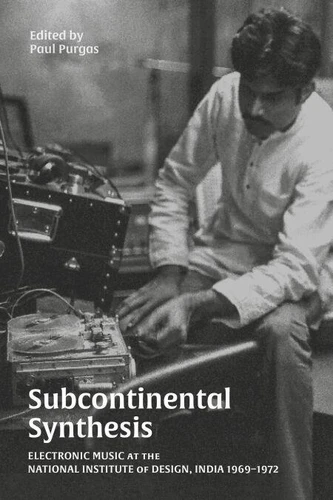
Subcontinental Synthesis. Electronic Music at the National Institute of Design, India 1969-1972
Par :Formats :
Disponible dans votre compte client Decitre ou Furet du Nord dès validation de votre commande. Le format ePub protégé est :
- Compatible avec une lecture sur My Vivlio (smartphone, tablette, ordinateur)
- Compatible avec une lecture sur liseuses Vivlio
- Pour les liseuses autres que Vivlio, vous devez utiliser le logiciel Adobe Digital Edition. Non compatible avec la lecture sur les liseuses Kindle, Remarkable et Sony
- Non compatible avec un achat hors France métropolitaine
 , qui est-ce ?
Notre partenaire de plateforme de lecture numérique où vous retrouverez l'ensemble de vos ebooks gratuitement
Pour en savoir plus sur nos ebooks, consultez notre aide en ligne ici
C'est si simple ! Lisez votre ebook avec l'app Vivlio sur votre tablette, mobile ou ordinateur :

- Nombre de pages264
- FormatePub
- ISBN978-1-913689-59-9
- EAN9781913689599
- Date de parution02/09/2025
- Protection num.Adobe DRM
- Taille5 Mo
- Infos supplémentairesepub
- ÉditeurStrange Attractor Press
Résumé
The history of India's first electronic music studio founded in 1969 at the National Institute of Design in Ahmedabad by David Tudor. Subcontinental Synthesis explores the history of India's first electronic music studio, founded in 1969 at the National Institute of Design in Ahmedabad with the support of the composer David Tudor. The essays and writings unravel the narrative and context surrounding the studio as well as the work of the Indian composers who created groundbreaking recordings during its four years of activity.
The texts reflect on the role of electronic music within a post-independence India, considering its interconnections with experimental design, radical pedagogies, and the international avant-garde, as well as the encircling conditions of Western ideological soft power within the global expansion of Modernism. ContributorsGeeta Dayal, Alannah Chance, Matt Williams, Shilpa Das, Jinraj Joshipura, You Nakai, Rahila Haque, and Paul Purgas
The texts reflect on the role of electronic music within a post-independence India, considering its interconnections with experimental design, radical pedagogies, and the international avant-garde, as well as the encircling conditions of Western ideological soft power within the global expansion of Modernism. ContributorsGeeta Dayal, Alannah Chance, Matt Williams, Shilpa Das, Jinraj Joshipura, You Nakai, Rahila Haque, and Paul Purgas
