SOLDES
Jusqu'à -70% sur une sélection d'articles*

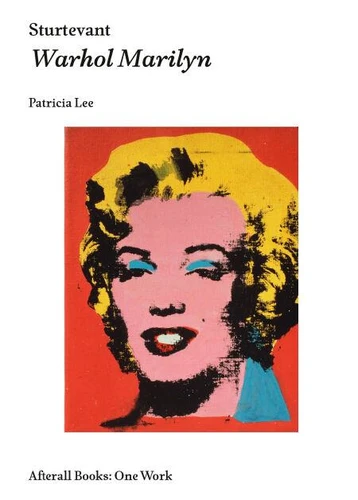
Sturtevant Warhol Marilyn /anglais
Par :Formats :
Disponible dans votre compte client Decitre ou Furet du Nord dès validation de votre commande. Le format ePub protégé est :
- Compatible avec une lecture sur My Vivlio (smartphone, tablette, ordinateur)
- Compatible avec une lecture sur liseuses Vivlio
- Pour les liseuses autres que Vivlio, vous devez utiliser le logiciel Adobe Digital Edition. Non compatible avec la lecture sur les liseuses Kindle, Remarkable et Sony
- Non compatible avec un achat hors France métropolitaine
 , qui est-ce ?
Notre partenaire de plateforme de lecture numérique où vous retrouverez l'ensemble de vos ebooks gratuitement
Pour en savoir plus sur nos ebooks, consultez notre aide en ligne ici
C'est si simple ! Lisez votre ebook avec l'app Vivlio sur votre tablette, mobile ou ordinateur :

- Nombre de pages104
- FormatePub
- ISBN978-1-84638-165-2
- EAN9781846381652
- Date de parution06/05/2016
- Protection num.Adobe DRM
- Taille17 Mo
- Infos supplémentairesepub
- ÉditeurAfterall Books
Résumé
An illustrated examination of a work-a Warhol that isn't by Warhol-that embodies a shift in attitudes about artistic authorship and originality. Warhol Marilyn (1965) is not a work by Andy Warhol but by the artist Elaine Sturtevant (1930-2014). Throughout her career, Sturtevant (as she preferred to be called) remade and exhibited works by other contemporary artists, among them Jasper Johns, Roy Lichtenstein, and Robert Rauschenberg.
For Warhol Marilyn, Sturtevant used one of Warhol's own silkscreens from his series of Marilyn printed multiples. (When asked how he made his silkscreened work, Warhol famously answered, "I don't know. Ask Elaine.") In this book, Patricia Lee examines Warhol Marilyn as representing a shift in thinking about artistic authorship and originality, highlighting a decisive moment in the rethinking of the contemporary artwork.
Lee describes the cognitive dissonance a viewer might feel on learning the identity of Warhol Marilyn's author, and explains that mistaken identity is part of Sturtevant's intention for the operation of the work. She discusses the ways that Sturtevant's methodology went against the grain of a certain interpretation of modernism, and addresses the cultural significance of both Warhol and Monroe as celebrity figures.
She considers Dorothy Podber's shooting a bullet through a stack of Warhol's Marilyns (thereafter known as The Shot Marilyns) at the Factory in 1964 and its possible influence on Sturtevant's decision to remake the work. Lee writes that Sturtevant's critical reception has been informed by some fictional forebears: the made-up artist Hank Herron (whose nonexistent work duplicating paintings by Frank Stella was reviewed by a fictional critic), and (suggested by Sturtevant herself) Pierre Menard, the title character of Jorge Luis Borges's "Pierre Menard, Author of the Quixote, " who recreates a section of Cervantes's masterpiece line by line.
And finally, she explores installation contexts and display strategies for Sturtevant's work as illuminating her broader artistic aims and principles.
For Warhol Marilyn, Sturtevant used one of Warhol's own silkscreens from his series of Marilyn printed multiples. (When asked how he made his silkscreened work, Warhol famously answered, "I don't know. Ask Elaine.") In this book, Patricia Lee examines Warhol Marilyn as representing a shift in thinking about artistic authorship and originality, highlighting a decisive moment in the rethinking of the contemporary artwork.
Lee describes the cognitive dissonance a viewer might feel on learning the identity of Warhol Marilyn's author, and explains that mistaken identity is part of Sturtevant's intention for the operation of the work. She discusses the ways that Sturtevant's methodology went against the grain of a certain interpretation of modernism, and addresses the cultural significance of both Warhol and Monroe as celebrity figures.
She considers Dorothy Podber's shooting a bullet through a stack of Warhol's Marilyns (thereafter known as The Shot Marilyns) at the Factory in 1964 and its possible influence on Sturtevant's decision to remake the work. Lee writes that Sturtevant's critical reception has been informed by some fictional forebears: the made-up artist Hank Herron (whose nonexistent work duplicating paintings by Frank Stella was reviewed by a fictional critic), and (suggested by Sturtevant herself) Pierre Menard, the title character of Jorge Luis Borges's "Pierre Menard, Author of the Quixote, " who recreates a section of Cervantes's masterpiece line by line.
And finally, she explores installation contexts and display strategies for Sturtevant's work as illuminating her broader artistic aims and principles.