
Daniel Gilbert was born in 1957 and lives with his wife in Cambridge, Massachusetts.
He is Harvard College Professor of Psychology at Harvard University. His research on affective forecasting examines the mistakes people make when they try to predict their emotional reactions to future events.
Stumbling on Happiness
Par :Formats :
Disponible dans votre compte client Decitre ou Furet du Nord dès validation de votre commande. Le format ePub protégé est :
- Compatible avec une lecture sur My Vivlio (smartphone, tablette, ordinateur)
- Compatible avec une lecture sur liseuses Vivlio
- Pour les liseuses autres que Vivlio, vous devez utiliser le logiciel Adobe Digital Edition. Non compatible avec la lecture sur les liseuses Kindle, Remarkable et Sony
- Non compatible avec un achat hors France métropolitaine
 , qui est-ce ?
Notre partenaire de plateforme de lecture numérique où vous retrouverez l'ensemble de vos ebooks gratuitement
Pour en savoir plus sur nos ebooks, consultez notre aide en ligne ici
C'est si simple ! Lisez votre ebook avec l'app Vivlio sur votre tablette, mobile ou ordinateur :

- Nombre de pages352
- FormatePub
- ISBN978-0-00-733068-3
- EAN9780007330683
- Date de parution01/06/2009
- Protection num.Adobe DRM
- Infos supplémentairesepub
- ÉditeurHarper Perennial
Résumé
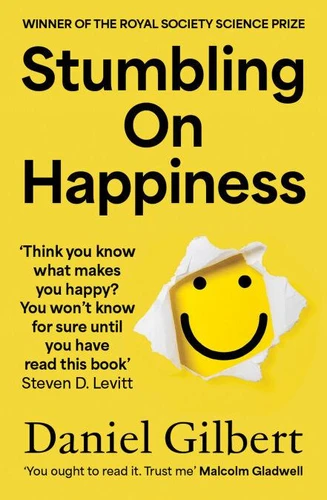
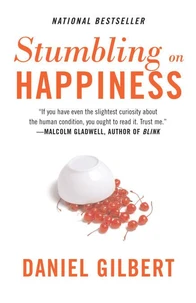
In this fascinating and often hilarious work - winner of the Royal Society of Science Prize 2007 - pre-eminent psychologist Daniel Gilbert shows how - and why - the majority of us have no idea how to make ourselves happy.
We all want to be happy, but do we know how? When it comes to improving tomorrow at the expense of today, we're terrible at predicting how to please our future selves.
In 'Stumbling on Happiness' Professor Daniel Gilbert combines psychology, neuroscience, economics and philosophy with irrepressible wit to describe how the human brain imagines its future - and how well (or badly) it predicts what it will enjoy.
Revealing some of the amazing secrets of human motivation, he also answers thought-provoking questions - why do dining companions order different meals instead of getting what they want? Why are shoppers happier when they can't get refunds? And why are couples less satisfied after having children while insisting that their kids are a source of joy?
Revealing some of the amazing secrets of human motivation, he also answers thought-provoking questions - why do dining companions order different meals instead of getting what they want? Why are shoppers happier when they can't get refunds? And why are couples less satisfied after having children while insisting that their kids are a source of joy?
A propos de Daniel Gilbert

Atlas des Tourbières de France
Grand Format
55,00 €
34,33 €
Stumbling on Happiness
E-book
11,46 €

Le Pérou
E-book
7,49 €


Laos. Regards, rencontres
Grand Format
25,00 €