SOLDES
Jusqu'à -70% sur une sélection d'articles*

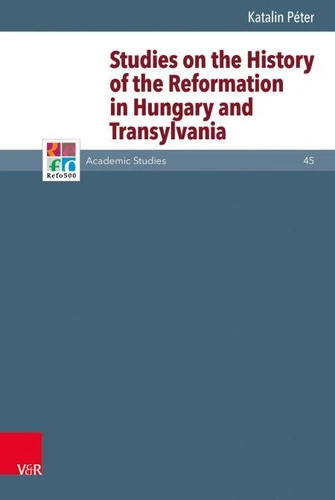
Studies on the History of the Reformation in Hungary and Transylvania
Par : , , , ,Formats :
Disponible dans votre compte client Decitre ou Furet du Nord dès validation de votre commande. Le format PDF est :
- Compatible avec une lecture sur My Vivlio (smartphone, tablette, ordinateur)
- Compatible avec une lecture sur liseuses Vivlio
- Pour les liseuses autres que Vivlio, vous devez utiliser le logiciel Adobe Digital Edition. Non compatible avec la lecture sur les liseuses Kindle, Remarkable et Sony
 , qui est-ce ?
Notre partenaire de plateforme de lecture numérique où vous retrouverez l'ensemble de vos ebooks gratuitement
Pour en savoir plus sur nos ebooks, consultez notre aide en ligne ici
C'est si simple ! Lisez votre ebook avec l'app Vivlio sur votre tablette, mobile ou ordinateur :

- Nombre de pages216
- FormatPDF
- ISBN978-3-647-55271-2
- EAN9783647552712
- Date de parution01/10/2018
- Protection num.pas de protection
- Taille41 Mo
- Infos supplémentairespdf
- ÉditeurVandenhoeck & Ruprecht
Résumé
Katalin Peter offers is a vigorous and stimulating reassessment of the history of the Protestant Reformation in Hungary. The Reformation has traditionally been explained in terms of theology, the corruption of the church, and the roles of princes. Katalin Peter shifts the context of study of the Reformation in Hungary to a bottom-up examination of the social dynamics of religious change, producing a lively narrative of the experiences and reactions of contemporary actors - including rural town and village communities, local priests and landlords - to evangelical ideas.
Through a close reading of church visitation records, common men and women emerge on the pages of the book both as the agents of religious change and as the defenders of the old faith, while local priests, as Peter, had to adapt to lay demands. A comparative analysis of the position and actions of landlords as church patrons in all three parts of contemporary Hungary - the kingdom under Habsburg rule, the Ottoman-vassal Principality of Transylvania, nd Ottoman Hungary - leads to the conclusion that patrons did not interfere in local religious change, since this change did not interfere with the distribution of power.
In addition to this radically new narrative of the social dynamics of the early Reformation in Hungary, Peter engages in the long-standing debates concerning the roles of the Protestant Reformation in intellectual culture, and she illuminates the scopes and limits of the confessional cultures that emerged in its wake. The book brings together a coherent body of work that began to be published in the 1990s and until now has only been available in Hungarian.
Through a close reading of church visitation records, common men and women emerge on the pages of the book both as the agents of religious change and as the defenders of the old faith, while local priests, as Peter, had to adapt to lay demands. A comparative analysis of the position and actions of landlords as church patrons in all three parts of contemporary Hungary - the kingdom under Habsburg rule, the Ottoman-vassal Principality of Transylvania, nd Ottoman Hungary - leads to the conclusion that patrons did not interfere in local religious change, since this change did not interfere with the distribution of power.
In addition to this radically new narrative of the social dynamics of the early Reformation in Hungary, Peter engages in the long-standing debates concerning the roles of the Protestant Reformation in intellectual culture, and she illuminates the scopes and limits of the confessional cultures that emerged in its wake. The book brings together a coherent body of work that began to be published in the 1990s and until now has only been available in Hungarian.