SOLDES
Jusqu'à -70% sur une sélection d'articles*

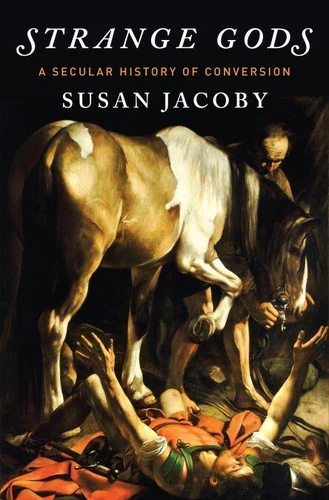
Strange Gods. A Secular History of Conversion
Par :Formats :
Disponible dans votre compte client Decitre ou Furet du Nord dès validation de votre commande. Le format ePub protégé est :
- Compatible avec une lecture sur My Vivlio (smartphone, tablette, ordinateur)
- Compatible avec une lecture sur liseuses Vivlio
- Pour les liseuses autres que Vivlio, vous devez utiliser le logiciel Adobe Digital Edition. Non compatible avec la lecture sur les liseuses Kindle, Remarkable et Sony
- Non compatible avec un achat hors France métropolitaine
 , qui est-ce ?
Notre partenaire de plateforme de lecture numérique où vous retrouverez l'ensemble de vos ebooks gratuitement
Pour en savoir plus sur nos ebooks, consultez notre aide en ligne ici
C'est si simple ! Lisez votre ebook avec l'app Vivlio sur votre tablette, mobile ou ordinateur :

- Nombre de pages512
- FormatePub
- ISBN978-1-101-87096-9
- EAN9781101870969
- Date de parution16/02/2016
- Protection num.Adobe DRM
- Taille18 Mo
- Infos supplémentairesepub
- ÉditeurVintage
Résumé
In a groundbreaking historical work that addresses religious conversion in the West from an uncompromisingly secular perspective, Susan Jacoby challenges the conventional narrative of conversion as a purely spiritual journey. From the transformation on the road to Damascus of the Jew Saul into the Christian evangelist Paul to a twenty-first-century "religious marketplace" in which half of Americans have changed faiths at least once, nothing has been more important in the struggle for reason than the right to believe in the God of one's choice or to reject belief in God altogether.
Focusing on the long, tense convergence of Judaism, Christianity, and Islam-each claiming possession of absolute truth-Jacoby examines conversions within a social and economic framework that includes theocratic coercion (unto torture and death) and the more friendly persuasion of political advantage, economic opportunism, and interreligious marriage. Moving through time, continents, and cultures-the triumph of Christianity over paganism in late antiquity, the Spanish Inquisition, John Calvin's dour theocracy, Southern plantations where African slaves had to accept their masters' religion-the narrative is punctuated by portraits of individual converts embodying the sacred and profane.
The cast includes Augustine of Hippo; John Donne; the German Jew Edith Stein, whose conversion to Catholicism did not save her from Auschwitz; boxing champion Muhammad Ali; and former President George W. Bush. The story also encompasses conversions to rigid secular ideologies, notably Stalinist Communism, with their own truth claims. Finally, Jacoby offers a powerful case for religious choice as a product of the secular Enlightenment.
In a forthright and unsettling conclusion linking the present with the most violent parts of the West's religious past, she reminds us that in the absence of Enlightenment values, radical Islamists are persecuting Christians, many other Muslims, and atheists in ways that recall the worst of the Middle Ages.(With 8 pages of black-and-white illustrations.)
Focusing on the long, tense convergence of Judaism, Christianity, and Islam-each claiming possession of absolute truth-Jacoby examines conversions within a social and economic framework that includes theocratic coercion (unto torture and death) and the more friendly persuasion of political advantage, economic opportunism, and interreligious marriage. Moving through time, continents, and cultures-the triumph of Christianity over paganism in late antiquity, the Spanish Inquisition, John Calvin's dour theocracy, Southern plantations where African slaves had to accept their masters' religion-the narrative is punctuated by portraits of individual converts embodying the sacred and profane.
The cast includes Augustine of Hippo; John Donne; the German Jew Edith Stein, whose conversion to Catholicism did not save her from Auschwitz; boxing champion Muhammad Ali; and former President George W. Bush. The story also encompasses conversions to rigid secular ideologies, notably Stalinist Communism, with their own truth claims. Finally, Jacoby offers a powerful case for religious choice as a product of the secular Enlightenment.
In a forthright and unsettling conclusion linking the present with the most violent parts of the West's religious past, she reminds us that in the absence of Enlightenment values, radical Islamists are persecuting Christians, many other Muslims, and atheists in ways that recall the worst of the Middle Ages.(With 8 pages of black-and-white illustrations.)