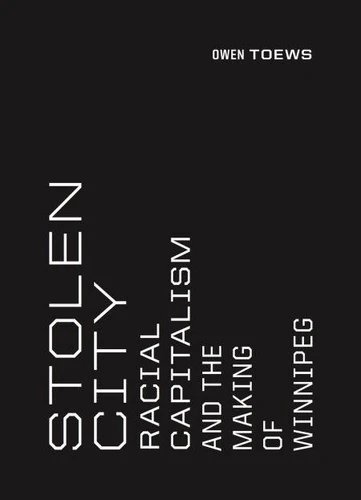
Through a combination of historical and contemporary analysis this book shows how settler colonialism, as a mode of racial capitalism, has made and remade Winnipeg and the Canadian Prairie West over the past one hundred and fifty years. It traces the emergence of a 'dominant bloc', or alliance, in Winnipeg that has imagined and installed successive regional development visions to guarantee its own wealth and power.
The book gives particular attention to the ways that an ascendant post-industrial urban redevelopment vision for Winnipeg's city-centre has renewed longstanding colonial 'legacies' of dispossession and racism over the past forty years. In doing so, it moves beyond the common tendency to break apart histories of settler-colonial conquest from studies of urban history or contemporary urban processes..
Through a combination of historical and contemporary analysis this book shows how settler colonialism, as a mode of racial capitalism, has made and remade Winnipeg and the Canadian Prairie West over the past one hundred and fifty years. It traces the emergence of a 'dominant bloc', or alliance, in Winnipeg that has imagined and installed successive regional development visions to guarantee its own wealth and power.
The book gives particular attention to the ways that an ascendant post-industrial urban redevelopment vision for Winnipeg's city-centre has renewed longstanding colonial 'legacies' of dispossession and racism over the past forty years. In doing so, it moves beyond the common tendency to break apart histories of settler-colonial conquest from studies of urban history or contemporary urban processes..