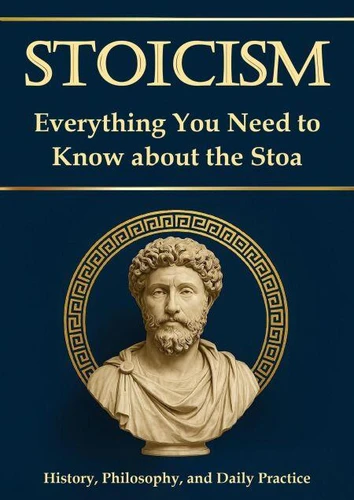
Stoicism – Everything You Need to Know About the Stoa: History, Philosophy, and Daily Practice. For Greater Resilience, Self - Reflection, and Self - Discovery; Including a 30 - Day Self - Experience Program. History and Philosophy
Par :Formats :
Disponible dans votre compte client Decitre ou Furet du Nord dès validation de votre commande. Le format ePub est :
- Compatible avec une lecture sur My Vivlio (smartphone, tablette, ordinateur)
- Compatible avec une lecture sur liseuses Vivlio
- Pour les liseuses autres que Vivlio, vous devez utiliser le logiciel Adobe Digital Edition. Non compatible avec la lecture sur les liseuses Kindle, Remarkable et Sony
 , qui est-ce ?
Notre partenaire de plateforme de lecture numérique où vous retrouverez l'ensemble de vos ebooks gratuitement
Pour en savoir plus sur nos ebooks, consultez notre aide en ligne ici
C'est si simple ! Lisez votre ebook avec l'app Vivlio sur votre tablette, mobile ou ordinateur :

- FormatePub
- ISBN8232663810
- EAN9798232663810
- Date de parution29/09/2025
- Protection num.pas de protection
- Infos supplémentairesepub
- ÉditeurDraft2Digital
Résumé
Discover Stoicism - a timeless philosophy made accessible, practical, and profoundly relevant for modern life. What You'll Find Inside:___ The complete history of Stoicism - from Zeno of Citium and the Stoa Poikile to Seneca, Epictetus, and Marcus Aurelius The three pillars of Stoic philosophy - Logic, Physics, and Ethics - explained clearly and accessibly Core Stoic concepts - including kataleptic impressions, assent, oikeiosis, apatheia, virtue, indifferents, and the cosmopolis Practical Stoicism for everyday life - with guidance on dealing with loss, fear, anger, and adversity Daily spiritual exercises - such as premeditatio malorum, journaling, visualization, and the cosmic perspective How Stoicism integrates with modern therapy - including its relationship with Cognitive Behavioral Therapy (CBT) Real-life applications - in leadership, military resilience, business ethics, and mindful self-leadership Critical reflections - on the limitations and risks of Stoicism as a self-optimization tool, and its engagement with feminist and intercultural critiques 30-Day Stoic Self-Experience Program - with daily prompts for practice, reflection, and ethical growth The Stoicism Mastery Quiz - to reinforce knowledge and deepen long-term understanding Stoicism - Everything You Need to Know about the Stoa is a comprehensive, accessible, and deeply practical guide to one of the most enduring schools of ancient philosophy.
Bridging the gap between scholarly depth and everyday relevance, this book offers a complete exploration of Stoicism - its historical roots, philosophical foundations, and transformative power in modern life. Beginning in 4th-century BCE Athens, the book traces the evolution of Stoicism through the lives and teachings of its major thinkers, from Zeno of Citium and Chrysippus to Seneca, Epictetus, and Marcus Aurelius.
It explains how Stoicism developed across the Hellenistic and Roman worlds, adapting to new cultures while preserving its ethical core. At the heart of this tradition lies a philosophy of rational living, personal responsibility, and virtue. The book clearly unpacks the three branches of Stoic thought - Logic, Physics, and Ethics - explaining complex ideas such as kataleptic impressions, oikeiosis, apatheia, the Logos, and the distinction between what is within our control and what is not.
More than an intellectual history, this is a guide for practice. Readers will learn how to apply Stoic principles to everyday challenges - coping with fear, loss, anger, and uncertainty - through timeless exercises like premeditatio malorum, journaling, visualization, and daily reflection. The book also shows how Stoicism integrates with modern disciplines like psychology, especially Cognitive Behavioral Therapy, and how it offers guidance in areas such as leadership, resilience, and ethical decision-making.
In addition to exploring Stoicism's recent revival in digital culture, podcasts, and self-development communities, the book critically examines its modern interpretations - addressing both its potential and its limitations in relation to contemporary issues like feminism, social justice, and intercultural ethics. With a structured 30-day Stoic self-experience program and a mastery quiz to reinforce learning, this book is not just a study of Stoicism - it is an invitation to live it.
Bridging the gap between scholarly depth and everyday relevance, this book offers a complete exploration of Stoicism - its historical roots, philosophical foundations, and transformative power in modern life. Beginning in 4th-century BCE Athens, the book traces the evolution of Stoicism through the lives and teachings of its major thinkers, from Zeno of Citium and Chrysippus to Seneca, Epictetus, and Marcus Aurelius.
It explains how Stoicism developed across the Hellenistic and Roman worlds, adapting to new cultures while preserving its ethical core. At the heart of this tradition lies a philosophy of rational living, personal responsibility, and virtue. The book clearly unpacks the three branches of Stoic thought - Logic, Physics, and Ethics - explaining complex ideas such as kataleptic impressions, oikeiosis, apatheia, the Logos, and the distinction between what is within our control and what is not.
More than an intellectual history, this is a guide for practice. Readers will learn how to apply Stoic principles to everyday challenges - coping with fear, loss, anger, and uncertainty - through timeless exercises like premeditatio malorum, journaling, visualization, and daily reflection. The book also shows how Stoicism integrates with modern disciplines like psychology, especially Cognitive Behavioral Therapy, and how it offers guidance in areas such as leadership, resilience, and ethical decision-making.
In addition to exploring Stoicism's recent revival in digital culture, podcasts, and self-development communities, the book critically examines its modern interpretations - addressing both its potential and its limitations in relation to contemporary issues like feminism, social justice, and intercultural ethics. With a structured 30-day Stoic self-experience program and a mastery quiz to reinforce learning, this book is not just a study of Stoicism - it is an invitation to live it.
Discover Stoicism - a timeless philosophy made accessible, practical, and profoundly relevant for modern life. What You'll Find Inside:___ The complete history of Stoicism - from Zeno of Citium and the Stoa Poikile to Seneca, Epictetus, and Marcus Aurelius The three pillars of Stoic philosophy - Logic, Physics, and Ethics - explained clearly and accessibly Core Stoic concepts - including kataleptic impressions, assent, oikeiosis, apatheia, virtue, indifferents, and the cosmopolis Practical Stoicism for everyday life - with guidance on dealing with loss, fear, anger, and adversity Daily spiritual exercises - such as premeditatio malorum, journaling, visualization, and the cosmic perspective How Stoicism integrates with modern therapy - including its relationship with Cognitive Behavioral Therapy (CBT) Real-life applications - in leadership, military resilience, business ethics, and mindful self-leadership Critical reflections - on the limitations and risks of Stoicism as a self-optimization tool, and its engagement with feminist and intercultural critiques 30-Day Stoic Self-Experience Program - with daily prompts for practice, reflection, and ethical growth The Stoicism Mastery Quiz - to reinforce knowledge and deepen long-term understanding Stoicism - Everything You Need to Know about the Stoa is a comprehensive, accessible, and deeply practical guide to one of the most enduring schools of ancient philosophy.
Bridging the gap between scholarly depth and everyday relevance, this book offers a complete exploration of Stoicism - its historical roots, philosophical foundations, and transformative power in modern life. Beginning in 4th-century BCE Athens, the book traces the evolution of Stoicism through the lives and teachings of its major thinkers, from Zeno of Citium and Chrysippus to Seneca, Epictetus, and Marcus Aurelius.
It explains how Stoicism developed across the Hellenistic and Roman worlds, adapting to new cultures while preserving its ethical core. At the heart of this tradition lies a philosophy of rational living, personal responsibility, and virtue. The book clearly unpacks the three branches of Stoic thought - Logic, Physics, and Ethics - explaining complex ideas such as kataleptic impressions, oikeiosis, apatheia, the Logos, and the distinction between what is within our control and what is not.
More than an intellectual history, this is a guide for practice. Readers will learn how to apply Stoic principles to everyday challenges - coping with fear, loss, anger, and uncertainty - through timeless exercises like premeditatio malorum, journaling, visualization, and daily reflection. The book also shows how Stoicism integrates with modern disciplines like psychology, especially Cognitive Behavioral Therapy, and how it offers guidance in areas such as leadership, resilience, and ethical decision-making.
In addition to exploring Stoicism's recent revival in digital culture, podcasts, and self-development communities, the book critically examines its modern interpretations - addressing both its potential and its limitations in relation to contemporary issues like feminism, social justice, and intercultural ethics. With a structured 30-day Stoic self-experience program and a mastery quiz to reinforce learning, this book is not just a study of Stoicism - it is an invitation to live it.
Bridging the gap between scholarly depth and everyday relevance, this book offers a complete exploration of Stoicism - its historical roots, philosophical foundations, and transformative power in modern life. Beginning in 4th-century BCE Athens, the book traces the evolution of Stoicism through the lives and teachings of its major thinkers, from Zeno of Citium and Chrysippus to Seneca, Epictetus, and Marcus Aurelius.
It explains how Stoicism developed across the Hellenistic and Roman worlds, adapting to new cultures while preserving its ethical core. At the heart of this tradition lies a philosophy of rational living, personal responsibility, and virtue. The book clearly unpacks the three branches of Stoic thought - Logic, Physics, and Ethics - explaining complex ideas such as kataleptic impressions, oikeiosis, apatheia, the Logos, and the distinction between what is within our control and what is not.
More than an intellectual history, this is a guide for practice. Readers will learn how to apply Stoic principles to everyday challenges - coping with fear, loss, anger, and uncertainty - through timeless exercises like premeditatio malorum, journaling, visualization, and daily reflection. The book also shows how Stoicism integrates with modern disciplines like psychology, especially Cognitive Behavioral Therapy, and how it offers guidance in areas such as leadership, resilience, and ethical decision-making.
In addition to exploring Stoicism's recent revival in digital culture, podcasts, and self-development communities, the book critically examines its modern interpretations - addressing both its potential and its limitations in relation to contemporary issues like feminism, social justice, and intercultural ethics. With a structured 30-day Stoic self-experience program and a mastery quiz to reinforce learning, this book is not just a study of Stoicism - it is an invitation to live it.