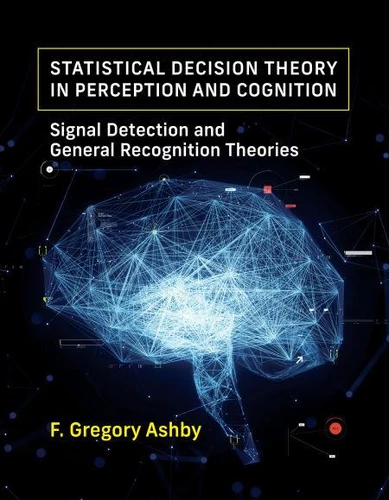
Statistical Decision Theory in Perception and Cognition. Signal Detection and General Recognition Theories
Par :Formats :
Disponible dans votre compte client Decitre ou Furet du Nord dès validation de votre commande. Le format ePub protégé est :
- Compatible avec une lecture sur My Vivlio (smartphone, tablette, ordinateur)
- Compatible avec une lecture sur liseuses Vivlio
- Pour les liseuses autres que Vivlio, vous devez utiliser le logiciel Adobe Digital Edition. Non compatible avec la lecture sur les liseuses Kindle, Remarkable et Sony
- Non compatible avec un achat hors France métropolitaine
 , qui est-ce ?
Notre partenaire de plateforme de lecture numérique où vous retrouverez l'ensemble de vos ebooks gratuitement
Pour en savoir plus sur nos ebooks, consultez notre aide en ligne ici
C'est si simple ! Lisez votre ebook avec l'app Vivlio sur votre tablette, mobile ou ordinateur :

- Nombre de pages454
- FormatePub
- ISBN978-0-262-05252-8
- EAN9780262052528
- Date de parution19/05/2026
- Protection num.Adobe DRM
- Taille19 Mo
- Infos supplémentairesepub
- ÉditeurThe MIT Press
Résumé
A comprehensive survey of the dominant methods for separating perceptual from decisional effects and for studying perceptual interactions. Human performance in any perceptual or cognitive task can change for a variety of reasons. Signal detection theory (SDT) and its multidimensional generalization, general recognition theory (GRT), are by far the dominant methods for determining whether a change in performance is due to a change in perception or a change in how perceptual or cognitive information is used to select a response.
In addition, GRT is the dominant method for studying perceptual interactions. In this book, author F. Gregory Ashby covers how SDT and GRT are used in thousands of published articles that span an enormous range of fields, including vision and all other areas of perception, memory, decision-making, eyewitness testimony, response time modeling, face perception, visual search, categorization, perceived similarity, preference, stereotyping, implicit learning, fMRI data analysis, and food science.
The book includes examples that illustrate how the various methods are applied, as well as Matlab code to perform several key computations.
In addition, GRT is the dominant method for studying perceptual interactions. In this book, author F. Gregory Ashby covers how SDT and GRT are used in thousands of published articles that span an enormous range of fields, including vision and all other areas of perception, memory, decision-making, eyewitness testimony, response time modeling, face perception, visual search, categorization, perceived similarity, preference, stereotyping, implicit learning, fMRI data analysis, and food science.
The book includes examples that illustrate how the various methods are applied, as well as Matlab code to perform several key computations.