SOLDES
Jusqu'à -70% sur une sélection d'articles*

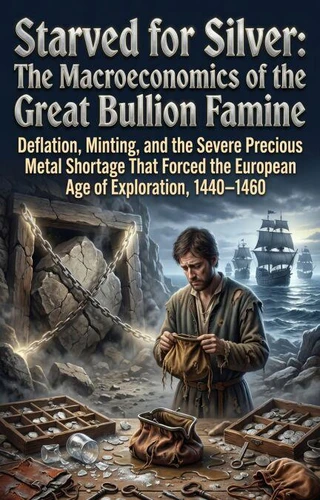
Starved for Silver: The Macroeconomics of the Great Bullion Famine. Deflation, Minting, and the Severe Precious Metal Shortage That Forced the European Age of Exploration, 1440–1460
Par :Formats :
Disponible dans votre compte client Decitre ou Furet du Nord dès validation de votre commande. Le format ePub est :
- Compatible avec une lecture sur My Vivlio (smartphone, tablette, ordinateur)
- Compatible avec une lecture sur liseuses Vivlio
- Pour les liseuses autres que Vivlio, vous devez utiliser le logiciel Adobe Digital Edition. Non compatible avec la lecture sur les liseuses Kindle, Remarkable et Sony
 , qui est-ce ?
Notre partenaire de plateforme de lecture numérique où vous retrouverez l'ensemble de vos ebooks gratuitement
Pour en savoir plus sur nos ebooks, consultez notre aide en ligne ici
C'est si simple ! Lisez votre ebook avec l'app Vivlio sur votre tablette, mobile ou ordinateur :

- Nombre de pages181
- FormatePub
- ISBN978-3-565-42296-8
- EAN9783565422968
- Date de parution21/04/2026
- Protection num.pas de protection
- Taille828 Ko
- Infos supplémentairesepub
- ÉditeurEmphaloz Publishing House
Résumé
How does an entire continent's economy function when physical money simply ceases to exist? Before credit cards or fiat currency, the European economy relied entirely on silver and gold coins. In the mid-15th century, Europe suffered a catastrophic macroeconomic crisis known as the Great Bullion Famine, where the physical supply of precious metals completely dried up.
Decades of massive trade deficits with the East had drained Europe of its silver, while domestic silver mines were simultaneously exhausted or flooded.
With no new metal to mint coins, prices crashed in a severe deflationary spiral. Merchants could not pay debts, trade routes froze, and entire regional economies collapsed into poverty. Desperate to bypass the Ottoman monopolies and find new sources of gold and silver, European monarchs were heavily incentivized to fund highly risky, speculative maritime expeditions across unknown oceans. This fascinating economic history deconstructs the medieval liquidity crisis.
It explores the hoarding of bullion, the desperate attempts by kings to debase their currencies, and the direct causal link between empty silver mines and Christopher Columbus's fateful voyage. Understand the economic engine of history. The Great Bullion Famine proves that the legendary Age of Exploration was not driven by pure curiosity, but by a desperate, continent-wide financial depression.
With no new metal to mint coins, prices crashed in a severe deflationary spiral. Merchants could not pay debts, trade routes froze, and entire regional economies collapsed into poverty. Desperate to bypass the Ottoman monopolies and find new sources of gold and silver, European monarchs were heavily incentivized to fund highly risky, speculative maritime expeditions across unknown oceans. This fascinating economic history deconstructs the medieval liquidity crisis.
It explores the hoarding of bullion, the desperate attempts by kings to debase their currencies, and the direct causal link between empty silver mines and Christopher Columbus's fateful voyage. Understand the economic engine of history. The Great Bullion Famine proves that the legendary Age of Exploration was not driven by pure curiosity, but by a desperate, continent-wide financial depression.