SOLDES
Jusqu'à -70% sur une sélection d'articles*

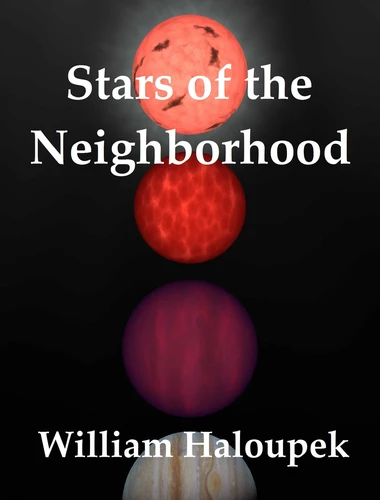
Stars of the Neighborhood
Par :Formats :
Disponible dans votre compte client Decitre ou Furet du Nord dès validation de votre commande. Le format ePub est :
- Compatible avec une lecture sur My Vivlio (smartphone, tablette, ordinateur)
- Compatible avec une lecture sur liseuses Vivlio
- Pour les liseuses autres que Vivlio, vous devez utiliser le logiciel Adobe Digital Edition. Non compatible avec la lecture sur les liseuses Kindle, Remarkable et Sony
 , qui est-ce ?
Notre partenaire de plateforme de lecture numérique où vous retrouverez l'ensemble de vos ebooks gratuitement
Pour en savoir plus sur nos ebooks, consultez notre aide en ligne ici
C'est si simple ! Lisez votre ebook avec l'app Vivlio sur votre tablette, mobile ou ordinateur :

- FormatePub
- ISBN978-1-301-68406-9
- EAN9781301684069
- Date de parution30/05/2013
- Protection num.pas de protection
- Infos supplémentairesepub
- ÉditeurBluewater
Résumé
(science article)As you get to know your stellar neighborhood, you will find some bizarre and fascinating stars, planets and other strange things. Each one has its own personality, and we are starting to learn more about them, individually. One of the first things you will notice is that more than two-thirds of the known nearby stars are red dwarfs (not dwarves!). These stars are much smaller, cooler and dimmer than Sol (our Sun).
In fact, they are only red hot, which is pretty cool for a star. The color of a star depends mainly on the temperature of its outer layers. Because red dwarfs are so dim, even those nearest to us cannot be seen without a telescope. Our neighborhood also includes a few Sol-like stars, some white dwarfs, which are small and hot, and brown dwarfs, small and cold. Brown dwarfs are not really considered stars, since they are not massive enough to sustain fusion of their most abundant element, hydrogen, into helium.
There are probably many smaller, dimmer objects, yet to be discovered. We don't always discover the nearest things first.
In fact, they are only red hot, which is pretty cool for a star. The color of a star depends mainly on the temperature of its outer layers. Because red dwarfs are so dim, even those nearest to us cannot be seen without a telescope. Our neighborhood also includes a few Sol-like stars, some white dwarfs, which are small and hot, and brown dwarfs, small and cold. Brown dwarfs are not really considered stars, since they are not massive enough to sustain fusion of their most abundant element, hydrogen, into helium.
There are probably many smaller, dimmer objects, yet to be discovered. We don't always discover the nearest things first.