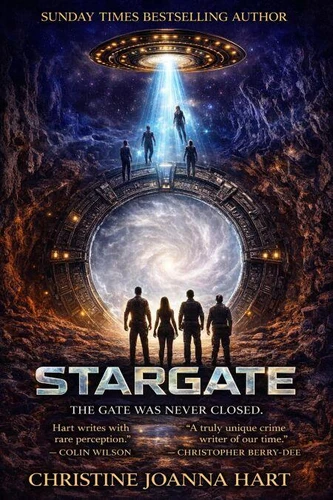
Stargate. The Psychology of Enhanced Perception Series, #2
Par :Formats :
Disponible dans votre compte client Decitre ou Furet du Nord dès validation de votre commande. Le format ePub est :
- Compatible avec une lecture sur My Vivlio (smartphone, tablette, ordinateur)
- Compatible avec une lecture sur liseuses Vivlio
- Pour les liseuses autres que Vivlio, vous devez utiliser le logiciel Adobe Digital Edition. Non compatible avec la lecture sur les liseuses Kindle, Remarkable et Sony
 , qui est-ce ?
Notre partenaire de plateforme de lecture numérique où vous retrouverez l'ensemble de vos ebooks gratuitement
Pour en savoir plus sur nos ebooks, consultez notre aide en ligne ici
C'est si simple ! Lisez votre ebook avec l'app Vivlio sur votre tablette, mobile ou ordinateur :

- FormatePub
- ISBN8233959448
- EAN9798233959448
- Date de parution12/04/2026
- Protection num.pas de protection
- Infos supplémentairesepub
- ÉditeurLinda Balsamo
Résumé
STARGATEThe Psychology of Enhanced Perception - Volume IIA series of violent, inexplicable deaths draws attention to a remote stretch of coastline in St Ives. At the centre of it: An isolated cottage in Zennor. A history linked to Aleister Crowley. And a pattern that does not belong to human behaviour alone. Leading Psychotherapist, and specialist in non-human intelligence, Christine Joanna Hart is asked to examine the case as a specialist in perception and anomalous experience.
What she encounters cannot be explained through pathology. Witness accounts are consistent. Psychological responses are precise. And the environment itself appears to function as a gateway. What begins to emerge is not belief-but structure:a portal-like system embedded in placeinteraction with non-human intelligencesand a mechanism that alters perception without revealing itselfAs the boundary between observer and participant begins to collapse, one question remains:What if these encounters have never been rare- only poorly understood?The gate was never closed.
What she encounters cannot be explained through pathology. Witness accounts are consistent. Psychological responses are precise. And the environment itself appears to function as a gateway. What begins to emerge is not belief-but structure:a portal-like system embedded in placeinteraction with non-human intelligencesand a mechanism that alters perception without revealing itselfAs the boundary between observer and participant begins to collapse, one question remains:What if these encounters have never been rare- only poorly understood?The gate was never closed.
A propos de christine joanna hart



5,99 €


Monsters of Fleet Street
E-book
2,99 €