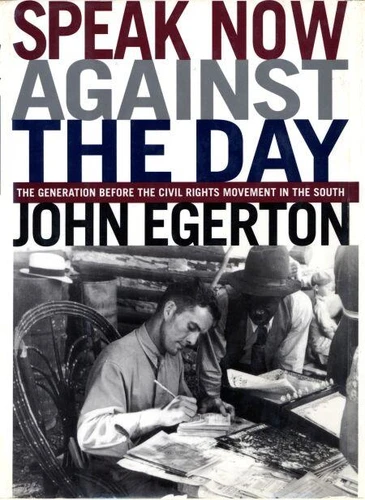
Speak Now Against the Day is the astonishing, little-known story of the Southerners who, in the generation before the Supreme Court outlawed school segregation and before Rosa Parks refused to surrender her seat on a Montgomery bus, challenged the validity of a white ruling class and a "separate but equal" division of the races. The voices of the dissenters, although present throughout the South's troubled history, grew louder with Roosevelt's election in 1932.
An increasing number of men and women who grappled daily with the economic and social woes of the South began forcefully and courageously to speak and to work toward the day when the South-and the nation-would deliver on the historic promises in the country's founding documents. This is the story of those brave prophets-thhe ministers, writers, educators, journalists, social activists, union members, and politicians, black and white, who pointed the way to higher ground.
Published forty years after the Brown v. Board of Education ruling of the Supreme Court, this compelling book is not only a rich trove of forgotten history-it also speaks profoundly to us in the context of today's continuing racial and social conflict.
Speak Now Against the Day is the astonishing, little-known story of the Southerners who, in the generation before the Supreme Court outlawed school segregation and before Rosa Parks refused to surrender her seat on a Montgomery bus, challenged the validity of a white ruling class and a "separate but equal" division of the races. The voices of the dissenters, although present throughout the South's troubled history, grew louder with Roosevelt's election in 1932.
An increasing number of men and women who grappled daily with the economic and social woes of the South began forcefully and courageously to speak and to work toward the day when the South-and the nation-would deliver on the historic promises in the country's founding documents. This is the story of those brave prophets-thhe ministers, writers, educators, journalists, social activists, union members, and politicians, black and white, who pointed the way to higher ground.
Published forty years after the Brown v. Board of Education ruling of the Supreme Court, this compelling book is not only a rich trove of forgotten history-it also speaks profoundly to us in the context of today's continuing racial and social conflict.

 , qui est-ce ?
