Author of English-language books on self-mastery, economic strategies, and historical shifts. Ethan bridges eras to deliver strategies that foster enduring success and fulfillment.
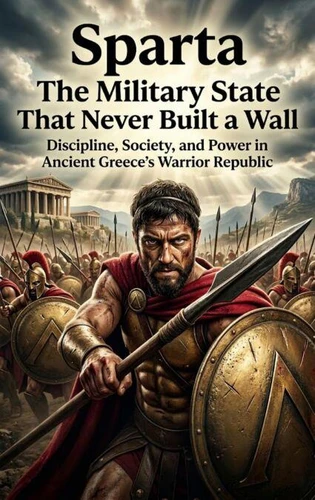
Sparta: The Military State That Never Built a Wall. Discipline, Society, and Power in Ancient Greece's Warrior Republic
Par :Formats :
Disponible dans votre compte client Decitre ou Furet du Nord dès validation de votre commande. Le format ePub est :
- Compatible avec une lecture sur My Vivlio (smartphone, tablette, ordinateur)
- Compatible avec une lecture sur liseuses Vivlio
- Pour les liseuses autres que Vivlio, vous devez utiliser le logiciel Adobe Digital Edition. Non compatible avec la lecture sur les liseuses Kindle, Remarkable et Sony
 , qui est-ce ?
Notre partenaire de plateforme de lecture numérique où vous retrouverez l'ensemble de vos ebooks gratuitement
Pour en savoir plus sur nos ebooks, consultez notre aide en ligne ici
C'est si simple ! Lisez votre ebook avec l'app Vivlio sur votre tablette, mobile ou ordinateur :

- Nombre de pages207
- FormatePub
- ISBN978-3-565-32680-8
- EAN9783565326808
- Date de parution15/03/2026
- Protection num.pas de protection
- Taille2 Mo
- Infos supplémentairesepub
- ÉditeurEmphaloz Publishing House
Résumé
For centuries, Sparta stood apart from the rest of Greece-a city without fortifications, defended not by stone but by discipline. Revered for its martial prowess and admired for its austerity, Sparta became both a symbol and a paradox: a state that exalted equality among its warriors while resting on the labor of an enslaved majority.
This book explores Sparta from within, peeling back the myth to reveal the political, social, and ideological machinery of the world's most militarized society.
Through the lens of archaeology, ancient texts, and modern scholarship, it traces how the agoge shaped Spartan citizens, how the helot system sustained them, and how women's unique status in the city-state reflected its rigid priorities. From Thermopylae to Leuctra, Sparta's power was forged in discipline and undone by inflexibility. Its legacy-part admiration, part warning-offers timeless insight into the cost of a society built entirely on war.
This is not the legend of Spartan valor, but the history of a state whose walls were human, and whose downfall began the moment it forgot it was mortal.
Through the lens of archaeology, ancient texts, and modern scholarship, it traces how the agoge shaped Spartan citizens, how the helot system sustained them, and how women's unique status in the city-state reflected its rigid priorities. From Thermopylae to Leuctra, Sparta's power was forged in discipline and undone by inflexibility. Its legacy-part admiration, part warning-offers timeless insight into the cost of a society built entirely on war.
This is not the legend of Spartan valor, but the history of a state whose walls were human, and whose downfall began the moment it forgot it was mortal.