SOLDES
Jusqu'à -70% sur une sélection d'articles*

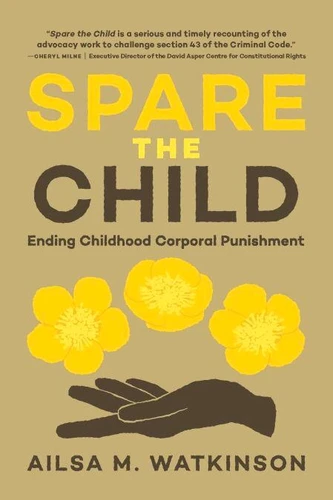
Spare the Child. Ending Childhood Corporal Punishment
Par :Formats :
Disponible dans votre compte client Decitre ou Furet du Nord dès validation de votre commande. Le format ePub est :
- Compatible avec une lecture sur My Vivlio (smartphone, tablette, ordinateur)
- Compatible avec une lecture sur liseuses Vivlio
- Pour les liseuses autres que Vivlio, vous devez utiliser le logiciel Adobe Digital Edition. Non compatible avec la lecture sur les liseuses Kindle, Remarkable et Sony
 , qui est-ce ?
Notre partenaire de plateforme de lecture numérique où vous retrouverez l'ensemble de vos ebooks gratuitement
Pour en savoir plus sur nos ebooks, consultez notre aide en ligne ici
C'est si simple ! Lisez votre ebook avec l'app Vivlio sur votre tablette, mobile ou ordinateur :

- Nombre de pages229
- FormatePub
- ISBN978-1-77940-106-9
- EAN9781779401069
- Date de parution20/01/2026
- Protection num.Digital Watermarking
- Taille5 Mo
- Infos supplémentairesepub
- ÉditeurUniversity of Regina Press
Résumé
An urgent examination of Canada's legal, cultural, and historical acceptance of corporal punishment and the children it continues to fail
In Spare the Child: Ending Childhood Corporal Punishment, author Ailsa Watkinson exposes a troubling truth: since 1892, Section 43 of the Canadian Criminal code has granted legal defense for parents and caregivers who use corporal punishment on children for the purpose of "correction." Remarkably, children remain the only group in Canada explicitly left unprotected from physical punishment under the law.
In 2004, a legal challenge heard by the Supreme Court of Canada argued that Section 43 directly violated children's equality and security rights under the Charter of Rights and Freedoms.
The challenge argued further that Section 43 undermined the three P's of children's rights-provision, protection, and participation-as outlined in the UN Convention on the Rights of the Child. Despite all this, the Supreme Court upheld the right to use corporal punishment in the home, reinforcing a legal framework that prioritizes parental rights over those of children. Watkinson critically examines that decision, its legal implications, and the psychological and social consequences of permitting physical force against children. Beyond the courtroom, Spare the Child deconstructs a practice long accepted as a common sense means of disciplining children.
It traces the deep historical roots of corporal punishment, including the legacy of European colonization, religion, and ideology in its justification-particularly through its devastating role in residential schools and lasting impact on Indigenous communities. Grounded in evidence-based research, the book reveals the long-term psychological harms of corporal punishment, urging parents and policymakers to defend children's fundamental right to dignity, safety, and protection.
The challenge argued further that Section 43 undermined the three P's of children's rights-provision, protection, and participation-as outlined in the UN Convention on the Rights of the Child. Despite all this, the Supreme Court upheld the right to use corporal punishment in the home, reinforcing a legal framework that prioritizes parental rights over those of children. Watkinson critically examines that decision, its legal implications, and the psychological and social consequences of permitting physical force against children. Beyond the courtroom, Spare the Child deconstructs a practice long accepted as a common sense means of disciplining children.
It traces the deep historical roots of corporal punishment, including the legacy of European colonization, religion, and ideology in its justification-particularly through its devastating role in residential schools and lasting impact on Indigenous communities. Grounded in evidence-based research, the book reveals the long-term psychological harms of corporal punishment, urging parents and policymakers to defend children's fundamental right to dignity, safety, and protection.