
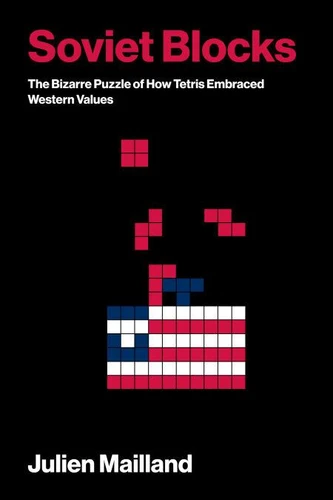
Soviet Blocks. The Bizarre Puzzle of How Tetris Embraced Western Values
Par :Formats :
Disponible dans votre compte client Decitre ou Furet du Nord dès validation de votre commande. Le format ePub protégé est :
- Compatible avec une lecture sur My Vivlio (smartphone, tablette, ordinateur)
- Compatible avec une lecture sur liseuses Vivlio
- Pour les liseuses autres que Vivlio, vous devez utiliser le logiciel Adobe Digital Edition. Non compatible avec la lecture sur les liseuses Kindle, Remarkable et Sony
- Non compatible avec un achat hors France métropolitaine
 , qui est-ce ?
Notre partenaire de plateforme de lecture numérique où vous retrouverez l'ensemble de vos ebooks gratuitement
Pour en savoir plus sur nos ebooks, consultez notre aide en ligne ici
C'est si simple ! Lisez votre ebook avec l'app Vivlio sur votre tablette, mobile ou ordinateur :

- Nombre de pages204
- Date de parution22/09/2026
- FormatePub
- ISBN978-0-262-05460-7
- EAN9780262054607
- Protection num.Adobe DRM
- Taille36 Mo
- Infos supplémentairesepub
- ÉditeurThe MIT Press
Résumé
A geopolitical and legal history of the bestselling videogame Tetris-the stunningly successful game that began in a Soviet research lab monitored by the KGB. Tetris-the game that would take the world by storm-was formally introduced to the West in 1987, at a time when Soviet technology exports were minimal and the Berlin Wall was still standing strong. Far from being a capitalist cultural product, the game had actually been designed in a Soviet computer lab tightly monitored by the KGB, at a time when Ronald Reagan referred to the USSR as the "evil empire." So, how did Tetris jump the wall to become such a blockbuster? And why does a US company, The Tetris Company (TTC), now own the game, when it was the property of Mother Russia? Why has TTC been able to monopolize both the shape of the pieces which predated Tetris and the very concept of an electronic puzzle game with falling pieces, which flies in the face of traditional copyright law? Why and how have Soviet socialists morphed into hardcore capitalists? In Soviet Blocks, Julien Mailland answers these questions and more, explaining the fascinating history of Tetris' commercial success as a story of two systems radically opposed in histories, cultures, economics, and politics.
A propos de Julien Mailland

39,24 €