SOLDES
Jusqu'à -70% sur une sélection d'articles*

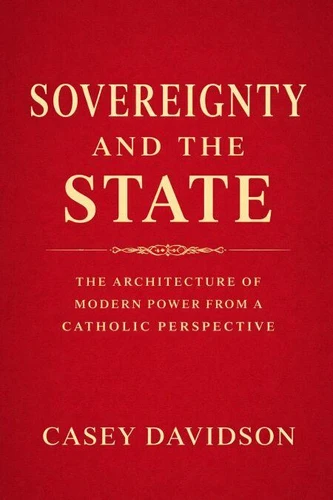
Sovereignty and the State: The Architecture of Modern Power From a Catholic Perspective
Par :Formats :
Disponible dans votre compte client Decitre ou Furet du Nord dès validation de votre commande. Le format ePub est :
- Compatible avec une lecture sur My Vivlio (smartphone, tablette, ordinateur)
- Compatible avec une lecture sur liseuses Vivlio
- Pour les liseuses autres que Vivlio, vous devez utiliser le logiciel Adobe Digital Edition. Non compatible avec la lecture sur les liseuses Kindle, Remarkable et Sony
 , qui est-ce ?
Notre partenaire de plateforme de lecture numérique où vous retrouverez l'ensemble de vos ebooks gratuitement
Pour en savoir plus sur nos ebooks, consultez notre aide en ligne ici
C'est si simple ! Lisez votre ebook avec l'app Vivlio sur votre tablette, mobile ou ordinateur :

- FormatePub
- ISBN8224653782
- EAN9798224653782
- Date de parution12/04/2026
- Protection num.pas de protection
- Infos supplémentairesepub
- ÉditeurDraft2Digital
Résumé
The modern world is haunted by a paradox it refuses to acknowledge. On the one hand, the contemporary state claims a form of sovereignty more absolute than any medieval monarch ever imagined. It regulates education, defines the limits of economic life, polices speech, oversees the family, and increasingly asserts jurisdiction over the most intimate dimensions of human existence. On the other hand, this same state is beset by a profound crisis of legitimacy.
Citizens no longer trust their rulers, institutions crumble under the weight of ideological conflict, and political authority appears fragile, contested, and often arbitrary. The modern state is at once omnipresent and hollow, powerful yet insecure, commanding yet unsure of the grounds of its own commands. This tension-between unprecedented power and unprecedented uncertainty-forms the backdrop of the present study.
From a traditional Catholic perspective, this crisis is not accidental. It is the fruit of a long historical process in which the theological foundations of political authority were severed from their source. For centuries, Christian civilization understood sovereignty not as an autonomous human creation but as a participation in the divine order. Authority was legitimate only insofar as it conformed to the natural law and served the common good.
The ruler was not a demiurge but a steward, a minister of justice whose power was bounded by moral law and oriented toward the flourishing of the community. The Church, as guardian of divine truth, provided the spiritual and moral horizon within which political life unfolded. This arrangement was not perfect-no human society is-but it rested on a coherent vision of man, law, and the purpose of political life.
Citizens no longer trust their rulers, institutions crumble under the weight of ideological conflict, and political authority appears fragile, contested, and often arbitrary. The modern state is at once omnipresent and hollow, powerful yet insecure, commanding yet unsure of the grounds of its own commands. This tension-between unprecedented power and unprecedented uncertainty-forms the backdrop of the present study.
From a traditional Catholic perspective, this crisis is not accidental. It is the fruit of a long historical process in which the theological foundations of political authority were severed from their source. For centuries, Christian civilization understood sovereignty not as an autonomous human creation but as a participation in the divine order. Authority was legitimate only insofar as it conformed to the natural law and served the common good.
The ruler was not a demiurge but a steward, a minister of justice whose power was bounded by moral law and oriented toward the flourishing of the community. The Church, as guardian of divine truth, provided the spiritual and moral horizon within which political life unfolded. This arrangement was not perfect-no human society is-but it rested on a coherent vision of man, law, and the purpose of political life.