


George Warwick Deeping (28 May 1877 - 20 April 1950) was an English novelist and short story writer, whose best-known novel was Sorrell and Son (1925).
Deeping's early work is dominated by historical romances. His later novels more usually dealt with modern life, and were critical of many tendencies of twentieth-century civilisation. His standpoint was generally that of a passionate individualism, distrustful both of ruling elites and of the lower classes, who were often presented as a threat to his embattled middle-class protagonists.
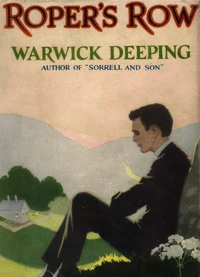
His most celebrated hero is Captain Sorrell M. C., the ex-officer who after the First World War is reduced to a menial occupation in which he is bullied by those of a lower social class and less education. Deeping's novels often deal with controversial issues. In her 2009 study, The Ordeal of Warwick Deeping, [6] Mary Grover lists these: social work and medicine in the slums (Roper's Row, 1929; The Impudence of Youth, 1946; Paradise Place, 1949.) gender ambiguity (The Return of the Petticoat, 1907) alcoholism (A Woman's War, 1907;[7] The Woman at the Door, 1937; The Dark House, 1941) euthanasia (Sorrell and Son (1925); The Dark House, 1941) wife abuse and justifiable homicide (The Woman at the Door, 1937) shell shock (The Secret Sanctuary, 1923) rape (The White Gate, 1913) pollution of the water supply (Sincerity, 1912) Critical reception : Despite his use of controversial themes, Deeping received little recognition as a serious writer.
George Orwell, whose political beliefs were very different from Deeping's, dismissed him as being among the 'huge tribe' of writers who 'simply don't notice what is happening'. Graham Greene also criticized Deeping's work; in his book Journey Without Maps Greene includes Deeping's novels on a list of books "written without truth, without compulsion, one dull word following another."By contrast, Kingsley Amis gave some guarded praise for Deeping's work.
Amis read Deeping's Sorrell and Son and initially disliked the book. However, in a later interview Amis praised Sorrell and Son, saying "Its sensibility was very crude but it delivered".
His most celebrated hero is Captain Sorrell M. C., the ex-officer who after the First World War is reduced to a menial occupation in which he is bullied by those of a lower social class and less education. Deeping's novels often deal with controversial issues. In her 2009 study, The Ordeal of Warwick Deeping, [6] Mary Grover lists these: social work and medicine in the slums (Roper's Row, 1929; The Impudence of Youth, 1946; Paradise Place, 1949.) gender ambiguity (The Return of the Petticoat, 1907) alcoholism (A Woman's War, 1907;[7] The Woman at the Door, 1937; The Dark House, 1941) euthanasia (Sorrell and Son (1925); The Dark House, 1941) wife abuse and justifiable homicide (The Woman at the Door, 1937) shell shock (The Secret Sanctuary, 1923) rape (The White Gate, 1913) pollution of the water supply (Sincerity, 1912) Critical reception : Despite his use of controversial themes, Deeping received little recognition as a serious writer.
George Orwell, whose political beliefs were very different from Deeping's, dismissed him as being among the 'huge tribe' of writers who 'simply don't notice what is happening'. Graham Greene also criticized Deeping's work; in his book Journey Without Maps Greene includes Deeping's novels on a list of books "written without truth, without compulsion, one dull word following another."By contrast, Kingsley Amis gave some guarded praise for Deeping's work.
Amis read Deeping's Sorrell and Son and initially disliked the book. However, in a later interview Amis praised Sorrell and Son, saying "Its sensibility was very crude but it delivered".