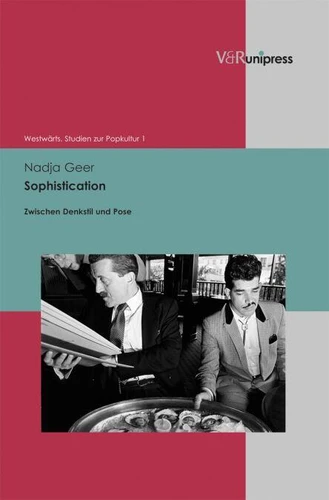
'Sophistication. Zwischen Denkstil und Pose' [Sophistication. Between a Mode of Thought and a Pose] is an investigation into a particular form of pop-intellectualism that developed in Germany from the 1980s onwards. It stresses the formal qualities of that discourse and explains how it functions in society. Rejecting the social democratic style of aesthetic indifference, which the new pop-intellectuals regarded as a form of repressive tolerance, they referred stylistically in their own writing to figures like Ernst Jünger.
This reverence for the writing of the conservative revolutionaries of the interwar period left a trace on the form that pop intellectualism took in Germany. While Rainald Goetz, Thomas Meinecke and Christian Kracht promoted sophistication, their general 'habitus' can be read as an elitist form of critical thinking. Moreover, with the German form of 'Poptheorie', Diedrich Diederichsen, in particular, created a kind of secret knowledge.
This analysis examines the reaction of erudition when confronted with pop and questions of politics and power. Is the form of the discourse more significant than what it promotes? Can that form be a signifier for a hidden political agenda?
'Sophistication. Zwischen Denkstil und Pose' [Sophistication. Between a Mode of Thought and a Pose] is an investigation into a particular form of pop-intellectualism that developed in Germany from the 1980s onwards. It stresses the formal qualities of that discourse and explains how it functions in society. Rejecting the social democratic style of aesthetic indifference, which the new pop-intellectuals regarded as a form of repressive tolerance, they referred stylistically in their own writing to figures like Ernst Jünger.
This reverence for the writing of the conservative revolutionaries of the interwar period left a trace on the form that pop intellectualism took in Germany. While Rainald Goetz, Thomas Meinecke and Christian Kracht promoted sophistication, their general 'habitus' can be read as an elitist form of critical thinking. Moreover, with the German form of 'Poptheorie', Diedrich Diederichsen, in particular, created a kind of secret knowledge.
This analysis examines the reaction of erudition when confronted with pop and questions of politics and power. Is the form of the discourse more significant than what it promotes? Can that form be a signifier for a hidden political agenda?