Hannah Brooks is an English-language author known for warm, insightful writing that explores relationships, self-discovery, and the emotional complexities of modern life. Her work blends accessible storytelling with thoughtful reflection, creating books that resonate through themes of resilience, personal growth, and human connection.
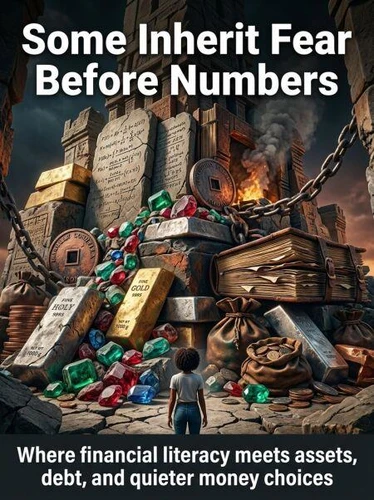
Some Inherit Fear Before Numbers. Where financial literacy meets assets, debt, and quieter money choices
Par :Formats :
Disponible dans votre compte client Decitre ou Furet du Nord dès validation de votre commande. Le format ePub est :
- Compatible avec une lecture sur My Vivlio (smartphone, tablette, ordinateur)
- Compatible avec une lecture sur liseuses Vivlio
- Pour les liseuses autres que Vivlio, vous devez utiliser le logiciel Adobe Digital Edition. Non compatible avec la lecture sur les liseuses Kindle, Remarkable et Sony
 , qui est-ce ?
Notre partenaire de plateforme de lecture numérique où vous retrouverez l'ensemble de vos ebooks gratuitement
Pour en savoir plus sur nos ebooks, consultez notre aide en ligne ici
C'est si simple ! Lisez votre ebook avec l'app Vivlio sur votre tablette, mobile ou ordinateur :

- Nombre de pages185
- FormatePub
- ISBN978-3-565-48288-7
- EAN9783565482887
- Date de parution07/06/2026
- Protection num.pas de protection
- Taille1 Mo
- Infos supplémentairesepub
- ÉditeurEmphaloz Publishing House
Résumé
Money often arrives before understanding does.
For many people, finances are learned through tension: unpaid bills, hurried advice, silent comparison, or the belief that earning more should automatically mean feeling safer. This book explores how financial literacy begins not with wealth, but with noticing the emotional patterns behind spending, saving, assets, debt, and responsibility.
Through grounded reflections on money mindset, personal finance, cash flow, and long-term decision-making, it looks at why liabilities can feel like success, why income can disappear without explanation, and why early lessons about money often shape adult confidence.
It does not romanticize wealth or shame ordinary mistakes. Instead, it helps readers see the difference between owning things and building stability, between reacting to pressure and understanding choices. Over time, money becomes less mysterious when it is no longer treated as proof of worth. What remains is a steadier relationship with enough, risk, patience, and the quiet discipline of seeing clearly.
It does not romanticize wealth or shame ordinary mistakes. Instead, it helps readers see the difference between owning things and building stability, between reacting to pressure and understanding choices. Over time, money becomes less mysterious when it is no longer treated as proof of worth. What remains is a steadier relationship with enough, risk, patience, and the quiet discipline of seeing clearly.
A propos de Hannah Brooks





9,99 €