SOLDES
Jusqu'à -70% sur une sélection d'articles*

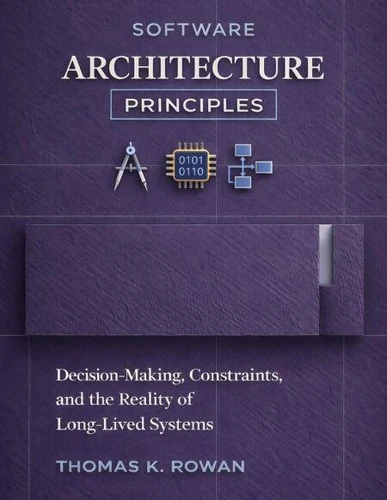
Software Architecture Principles: Decision-Making, Constraints, and the Reality of Long-Lived Systems
Par :Formats :
Disponible dans votre compte client Decitre ou Furet du Nord dès validation de votre commande. Le format ePub est :
- Compatible avec une lecture sur My Vivlio (smartphone, tablette, ordinateur)
- Compatible avec une lecture sur liseuses Vivlio
- Pour les liseuses autres que Vivlio, vous devez utiliser le logiciel Adobe Digital Edition. Non compatible avec la lecture sur les liseuses Kindle, Remarkable et Sony
 , qui est-ce ?
Notre partenaire de plateforme de lecture numérique où vous retrouverez l'ensemble de vos ebooks gratuitement
Pour en savoir plus sur nos ebooks, consultez notre aide en ligne ici
C'est si simple ! Lisez votre ebook avec l'app Vivlio sur votre tablette, mobile ou ordinateur :

- FormatePub
- ISBN8232728496
- EAN9798232728496
- Date de parution04/01/2026
- Protection num.pas de protection
- Infos supplémentairesepub
- ÉditeurDraft2Digital
Résumé
Software Architecture PrinciplesDecision-Making, Constraints, and the Reality of Long-Lived SystemsThomas K. RowanMost software systems don't fail at launch. They fail years later-quietly, gradually, and expensively. Not because the code was bad. Not because the wrong framework was chosen. But because architectural decisions hardened, constraints drifted, and no one noticed until change became dangerous.
Software Architecture Principles is written for engineers and architects who have lived through that reality. This book is not about patterns, styles, or technologies. It is about the forces that shape software systems after the diagrams are done-under growth, pressure, organizational change, and time. It explores why systems become hard to change even when they look well-structured, why clean code does not guarantee architectural health, and why architecture often becomes visible only when something breaks.
At its core, this book is about judgment. Rather than teaching what architecture should look like, it explains how architecture actually behaves in long-lived systems. It examines decisions that quietly become irreversible, boundaries that fail without appearing broken, constraints that erode under pressure, and responsibilities that are inherited long after their original context is gone. Inside, you'll explore: Why architecture exists and why it cannot be "finished" How to recognize decisions that will shape a system's future Why time is the most important architectural dimension How constraints, not structure, preserve system integrity How meaning decays across boundaries and organizations Why clean code is necessary but insufficient How power, ownership, and incentives shape architecture Why architecture is always happening-even when no one is "doing architecture" What architects ultimately owe to the future The book treats architecture as an ongoing condition, not a phase or a role.
Diagrams are used sparingly and conceptually, to clarify forces rather than prescribe solutions. The emphasis throughout is on long-term system health, recoverability, and the ability to change without fear. This book is written for: Software architects Senior, staff, and principal engineers Technical leads and engineering managers Anyone responsible for systems that cannot simply be rewritten It assumes real-world experience and speaks directly to the challenges that emerge only after systems have aged.
If you've moved beyond style debates and framework comparisons-and are now grappling with systems that must survive change, pressure, and time-Software Architecture Principles will change how you think about architecture and responsibility. This is a book for people who will inherit systems they did not choose, and still be accountable for how they evolve.
Software Architecture Principles is written for engineers and architects who have lived through that reality. This book is not about patterns, styles, or technologies. It is about the forces that shape software systems after the diagrams are done-under growth, pressure, organizational change, and time. It explores why systems become hard to change even when they look well-structured, why clean code does not guarantee architectural health, and why architecture often becomes visible only when something breaks.
At its core, this book is about judgment. Rather than teaching what architecture should look like, it explains how architecture actually behaves in long-lived systems. It examines decisions that quietly become irreversible, boundaries that fail without appearing broken, constraints that erode under pressure, and responsibilities that are inherited long after their original context is gone. Inside, you'll explore: Why architecture exists and why it cannot be "finished" How to recognize decisions that will shape a system's future Why time is the most important architectural dimension How constraints, not structure, preserve system integrity How meaning decays across boundaries and organizations Why clean code is necessary but insufficient How power, ownership, and incentives shape architecture Why architecture is always happening-even when no one is "doing architecture" What architects ultimately owe to the future The book treats architecture as an ongoing condition, not a phase or a role.
Diagrams are used sparingly and conceptually, to clarify forces rather than prescribe solutions. The emphasis throughout is on long-term system health, recoverability, and the ability to change without fear. This book is written for: Software architects Senior, staff, and principal engineers Technical leads and engineering managers Anyone responsible for systems that cannot simply be rewritten It assumes real-world experience and speaks directly to the challenges that emerge only after systems have aged.
If you've moved beyond style debates and framework comparisons-and are now grappling with systems that must survive change, pressure, and time-Software Architecture Principles will change how you think about architecture and responsibility. This is a book for people who will inherit systems they did not choose, and still be accountable for how they evolve.