Macrosociology-the study of large-scale social structures and the fundamental principles of social organization-was the style of sociology practiced by the founders of the discipline. Today, the social theories of Karl Marx, Max Weber, Émile Durkheim, and Herbert Spencer (among others) are commonly studied as part of the history of the field, but, although the macrosociological approach that these thinkers advocated is still employed, it no longer dominates the discipline.
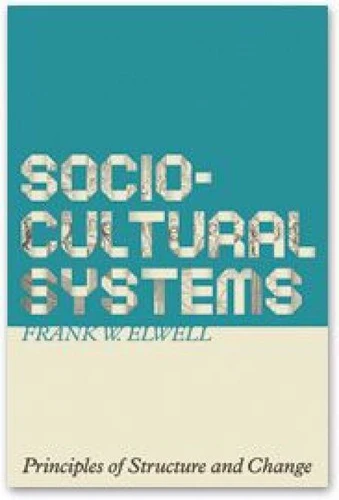
Instead, sociologists typically adopt a narrower focus, specializing in areas such as social psychology, medicine, religion, or the study of social stratification. Examining the bigger picture is a task often left to public intellectuals. Sociocultural Systems aims to reinstate macrosciology as the heart of the discipline by demonstrating that both classical and contemporary macrosociologists stand upon common ground.
Focusing on the broad issues that concerned the founders, Elwell addresses questions such as: Historically, what factors accounted for the origin, survival, and evolution of sociocultural systems? Why were some societies more technologically advanced than others? What is the origin of capitalism? What factors determine the allocation of goods and services within and among societies? What effects do changes in government and economic institutions have on communities? Elwell argues that, as evolution does for biology, the macrosociological paradigm offers an analytical strategy that can be used both to guide and prioritize research in all of the myriad specialties within sociology and to lay forth an orderly body of knowledge for students.
Clearly articulating important sociological principles, Sociocultural Systems provides a critical understanding of social institutions and issues, while also furnishing a framework for possible solutions to the perennial social crises that are part and parcel of the development of human societies.
Macrosociology-the study of large-scale social structures and the fundamental principles of social organization-was the style of sociology practiced by the founders of the discipline. Today, the social theories of Karl Marx, Max Weber, Émile Durkheim, and Herbert Spencer (among others) are commonly studied as part of the history of the field, but, although the macrosociological approach that these thinkers advocated is still employed, it no longer dominates the discipline.
Instead, sociologists typically adopt a narrower focus, specializing in areas such as social psychology, medicine, religion, or the study of social stratification. Examining the bigger picture is a task often left to public intellectuals. Sociocultural Systems aims to reinstate macrosciology as the heart of the discipline by demonstrating that both classical and contemporary macrosociologists stand upon common ground.
Focusing on the broad issues that concerned the founders, Elwell addresses questions such as: Historically, what factors accounted for the origin, survival, and evolution of sociocultural systems? Why were some societies more technologically advanced than others? What is the origin of capitalism? What factors determine the allocation of goods and services within and among societies? What effects do changes in government and economic institutions have on communities? Elwell argues that, as evolution does for biology, the macrosociological paradigm offers an analytical strategy that can be used both to guide and prioritize research in all of the myriad specialties within sociology and to lay forth an orderly body of knowledge for students.
Clearly articulating important sociological principles, Sociocultural Systems provides a critical understanding of social institutions and issues, while also furnishing a framework for possible solutions to the perennial social crises that are part and parcel of the development of human societies.


 , qui est-ce ?
