SOLDES
Jusqu'à -70% sur une sélection d'articles*

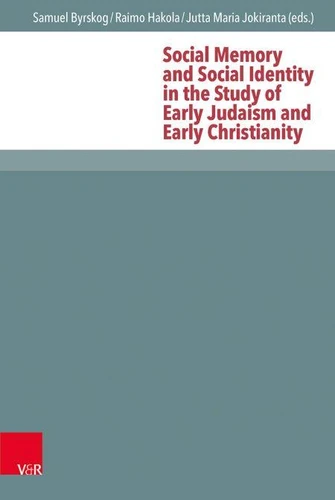
Social Memory and Social Identity in the Study of Early Judaism and Early Christianity
Par : , ,Formats :
Disponible dans votre compte client Decitre ou Furet du Nord dès validation de votre commande. Le format PDF est :
- Compatible avec une lecture sur My Vivlio (smartphone, tablette, ordinateur)
- Compatible avec une lecture sur liseuses Vivlio
- Pour les liseuses autres que Vivlio, vous devez utiliser le logiciel Adobe Digital Edition. Non compatible avec la lecture sur les liseuses Kindle, Remarkable et Sony
 , qui est-ce ?
Notre partenaire de plateforme de lecture numérique où vous retrouverez l'ensemble de vos ebooks gratuitement
Pour en savoir plus sur nos ebooks, consultez notre aide en ligne ici
C'est si simple ! Lisez votre ebook avec l'app Vivlio sur votre tablette, mobile ou ordinateur :

- Nombre de pages312
- FormatPDF
- ISBN978-3-647-59375-3
- EAN9783647593753
- Date de parution12/09/2016
- Protection num.pas de protection
- Taille2 Mo
- Infos supplémentairespdf
- ÉditeurVandenhoeck & Ruprecht
Résumé
The concepts of social memory and social identity have been increasingly used in the study of ancient Jewish and Christian sources. In this collection of articles, international specialists apply interdisciplinary methodology related to these concepts to early Jewish and Christian sources. The volume offers an up-to-date presentation of how social memory studies and socio-psychological identity approach have been used in the study of Biblical and related literature.
The articles examine how Jewish and Christian sources participate in the processes of collective recollection and in this way contribute to the construction of distinctive social identities. The writers demonstrate the benefits of the use of interdisciplinary methodologies in the study of early Judaism and Christianity but also discuss potential problems that have emerged when modern theories have been applied to ancient material.
In the first part of the book, scholars apply social, collective and cultural memory approaches to early Christian sources. The articles discuss philosophical aspects of memory, the formation of gospel traditions in the light of memory studies, the role of eyewitness testimony in canonical and non-canonical Christian sources and the oral delivery of New Testament writings in relation to ancient delivery practices.
Part two applies the social identity approach to various Dead Sea Scrolls and New Testament writings. The writers analyse the role marriage, deviant behaviour, and wisdom traditions in the construction of identity in the Dead Sea Scrolls. Other topics include forgiveness in the Gospel of Matthew, the imagined community in the Gospel John, the use of the past in Paul's Epistles and the relationship between the covenant and collective identity in the Epistle to the Hebrews and the First Epistle of Clement.
The articles examine how Jewish and Christian sources participate in the processes of collective recollection and in this way contribute to the construction of distinctive social identities. The writers demonstrate the benefits of the use of interdisciplinary methodologies in the study of early Judaism and Christianity but also discuss potential problems that have emerged when modern theories have been applied to ancient material.
In the first part of the book, scholars apply social, collective and cultural memory approaches to early Christian sources. The articles discuss philosophical aspects of memory, the formation of gospel traditions in the light of memory studies, the role of eyewitness testimony in canonical and non-canonical Christian sources and the oral delivery of New Testament writings in relation to ancient delivery practices.
Part two applies the social identity approach to various Dead Sea Scrolls and New Testament writings. The writers analyse the role marriage, deviant behaviour, and wisdom traditions in the construction of identity in the Dead Sea Scrolls. Other topics include forgiveness in the Gospel of Matthew, the imagined community in the Gospel John, the use of the past in Paul's Epistles and the relationship between the covenant and collective identity in the Epistle to the Hebrews and the First Epistle of Clement.