SOLDES
Jusqu'à -70% sur une sélection d'articles*

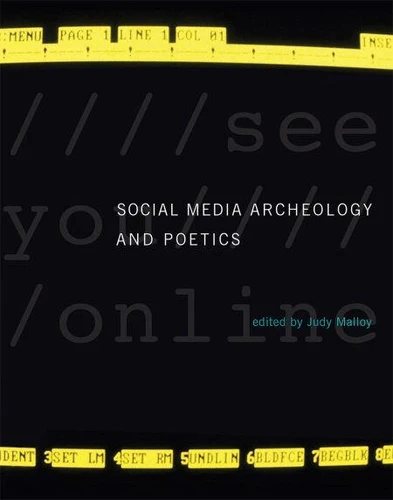
Social Media Archeology and Poetics
Par :Formats :
Disponible dans votre compte client Decitre ou Furet du Nord dès validation de votre commande. Le format ePub protégé est :
- Compatible avec une lecture sur My Vivlio (smartphone, tablette, ordinateur)
- Compatible avec une lecture sur liseuses Vivlio
- Pour les liseuses autres que Vivlio, vous devez utiliser le logiciel Adobe Digital Edition. Non compatible avec la lecture sur les liseuses Kindle, Remarkable et Sony
- Non compatible avec un achat hors France métropolitaine
 , qui est-ce ?
Notre partenaire de plateforme de lecture numérique où vous retrouverez l'ensemble de vos ebooks gratuitement
Pour en savoir plus sur nos ebooks, consultez notre aide en ligne ici
C'est si simple ! Lisez votre ebook avec l'app Vivlio sur votre tablette, mobile ou ordinateur :

- Nombre de pages488
- FormatePub
- ISBN978-0-262-33688-8
- EAN9780262336888
- Date de parution16/08/2016
- Protection num.Adobe DRM
- Taille3 Mo
- Infos supplémentairesepub
- ÉditeurThe MIT Press
Résumé
First person accounts by pioneers in the field, classic essays, and new scholarship document the collaborative and creative practices of early social media. Focusing on early social media in the arts and humanities and on the core role of creative computer scientists, artists, and scholars in shaping the pre-Web social media landscape, Social Media Archeology and Poetics documents social media lineage, beginning in the 1970s with collaborative ARPANET research, Community Memory, PLATO, Minitel, and ARTEX and continuing into the 1980s and beyond with the Electronic Café, Art Com Electronic Network, Arts Wire, The THING, and many more.
With first person accounts from pioneers in the field, as well as papers by artists, scholars, and curators, Social Media Archeology and Poetics documents how these platforms were vital components of early social networking and important in the development of new media and electronic literature. It describes platforms that allowed artists and musicians to share and publish their work, community networking diversity, and the creation of footholds for the arts and humanities online.
And it invites comparisons of social media in the past and present, asking: What can we learn from early social media that will inspire us to envision a greater cultural presence on contemporary social media?ContributorsMadeline Gonzalez Allen, James Blustein, Hank Bull, Annick Bureaud, J. R. Carpenter, Paul E. Ceruzzi, Anna Couey, Amanda McDonald Crowley, Steve Dietz, Judith Donath, Steven Durland, Lee Felsenstein, Susanne Gerber, Ann-Barbara Graff, Dene Grigar, Stacy Horn, Antoinette LaFarge, Deena Larsen, Gary O.
Larson, Alan Liu, Geert Lovink, Richard Lowenberg, Judy Malloy, Scott McPhee, Julianne Nyhan, Howard Rheingold, Randy Ross, Wolfgang Staehle, Fred Truck, Rob Wittig, David R. Woolley
With first person accounts from pioneers in the field, as well as papers by artists, scholars, and curators, Social Media Archeology and Poetics documents how these platforms were vital components of early social networking and important in the development of new media and electronic literature. It describes platforms that allowed artists and musicians to share and publish their work, community networking diversity, and the creation of footholds for the arts and humanities online.
And it invites comparisons of social media in the past and present, asking: What can we learn from early social media that will inspire us to envision a greater cultural presence on contemporary social media?ContributorsMadeline Gonzalez Allen, James Blustein, Hank Bull, Annick Bureaud, J. R. Carpenter, Paul E. Ceruzzi, Anna Couey, Amanda McDonald Crowley, Steve Dietz, Judith Donath, Steven Durland, Lee Felsenstein, Susanne Gerber, Ann-Barbara Graff, Dene Grigar, Stacy Horn, Antoinette LaFarge, Deena Larsen, Gary O.
Larson, Alan Liu, Geert Lovink, Richard Lowenberg, Judy Malloy, Scott McPhee, Julianne Nyhan, Howard Rheingold, Randy Ross, Wolfgang Staehle, Fred Truck, Rob Wittig, David R. Woolley