
Bryan Evans is an associate professor in the Department of Politics and Public Administration at Ryerson University. Prior to joining Ryerson in 2003, he held senior policy advisory and management positions in the Ontario Legislature and Government.
Ingo Schmidt is an economist and the coordinator of the Labour Studies Program at Athabasca University. He has taught in Germany as well as Canada and was formerly staff economist with the metalworkers union, IG Metall, in Germany.
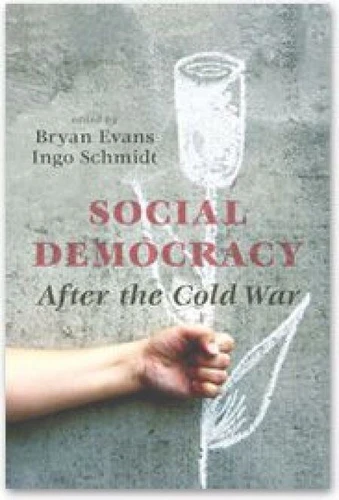
Social Democracy After the Cold War
Par : ,Formats :
Disponible dans votre compte client Decitre ou Furet du Nord dès validation de votre commande. Le format ePub est :
- Compatible avec une lecture sur My Vivlio (smartphone, tablette, ordinateur)
- Compatible avec une lecture sur liseuses Vivlio
- Pour les liseuses autres que Vivlio, vous devez utiliser le logiciel Adobe Digital Edition. Non compatible avec la lecture sur les liseuses Kindle, Remarkable et Sony
 , qui est-ce ?
Notre partenaire de plateforme de lecture numérique où vous retrouverez l'ensemble de vos ebooks gratuitement
Pour en savoir plus sur nos ebooks, consultez notre aide en ligne ici
C'est si simple ! Lisez votre ebook avec l'app Vivlio sur votre tablette, mobile ou ordinateur :

- Nombre de pages340
- FormatePub
- ISBN978-1-926836-89-8
- EAN9781926836898
- Date de parution01/06/2012
- Protection num.Digital Watermarking
- Taille3 Mo
- Infos supplémentairesepub
- ÉditeurAU Press
Résumé
Despite the market triumphalism that greeted the end of the Cold War, the collapse of the Soviet empire seemed initially to herald new possibilities for social democracy. In the 1990s, with a new era of peace and economic prosperity apparently imminent, people discontented with the realities of global capitalism swept social democrats into power in many Western countries. The resurgence was, however, brief.
Neither the recurring economic crises of the 2000s nor the ongoing War on Terror was conducive to social democracy, which soon gave way to a prolonged decline in countries where social democrats had once held power. Arguing that neither globalization nor demographic change was key to the failure of social democracy, the contributors to this volume analyze the rise and decline of Third Way social democracy and seek to lay the groundwork for the reformulation of progressive class politics.
Offering a comparative look at social democratic experience since the Cold War, the volume examines countries where social democracy has long been an influential political force-Sweden, Germany, Britain, and Australia-while also considering the history of Canada's NDP and the emergence of New Left parties in Germany and the province of Québec. The case studies point to a social democracy that has confirmed its rupture with the postwar order and its role as the primary political representative of working-class interests.
Once marked by redistributive and egalitarian policy perspectives, social democracy has, the book argues, assumed a new role-that of a modernizing force advancing the neoliberal cause.
Neither the recurring economic crises of the 2000s nor the ongoing War on Terror was conducive to social democracy, which soon gave way to a prolonged decline in countries where social democrats had once held power. Arguing that neither globalization nor demographic change was key to the failure of social democracy, the contributors to this volume analyze the rise and decline of Third Way social democracy and seek to lay the groundwork for the reformulation of progressive class politics.
Offering a comparative look at social democratic experience since the Cold War, the volume examines countries where social democracy has long been an influential political force-Sweden, Germany, Britain, and Australia-while also considering the history of Canada's NDP and the emergence of New Left parties in Germany and the province of Québec. The case studies point to a social democracy that has confirmed its rupture with the postwar order and its role as the primary political representative of working-class interests.
Once marked by redistributive and egalitarian policy perspectives, social democracy has, the book argues, assumed a new role-that of a modernizing force advancing the neoliberal cause.