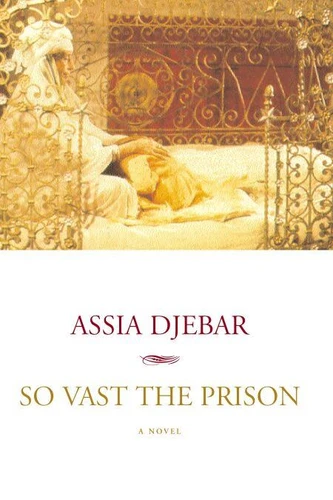
So Vast the Prison is the double-threaded story of a modern, educated Algerian woman existing in a man's society, and, not surprisingly, living a life of contradictions. Djebar, too, tackles cross-cultural issues just by writing in French of an Arab society (the actual act of writing contrasting with the strong oral traditions of the indigenous culture), as a woman who has seen revolution in a now post-colonial country, and as an Algerian living in exile.
In this new novel, Djebar brilliantly plays these contradictions against the bloody history of Carthage, a great civilization the Berbers were once compared to, and makes it both a tribute to the loss of Berber culture and a meeting-point of culture and language. As the story of one woman's experience in Algeria, it is a private tale, but one embedded in a vast history. A radically singular voice in the world of literature, Assia Djebar's work ultimately reaches beyond the particulars of Algeria to embrace, in stark yet sensuous language, the universal themes of violence, intimacy, ostracism, victimization, and exile.
So Vast the Prison is the double-threaded story of a modern, educated Algerian woman existing in a man's society, and, not surprisingly, living a life of contradictions. Djebar, too, tackles cross-cultural issues just by writing in French of an Arab society (the actual act of writing contrasting with the strong oral traditions of the indigenous culture), as a woman who has seen revolution in a now post-colonial country, and as an Algerian living in exile.
In this new novel, Djebar brilliantly plays these contradictions against the bloody history of Carthage, a great civilization the Berbers were once compared to, and makes it both a tribute to the loss of Berber culture and a meeting-point of culture and language. As the story of one woman's experience in Algeria, it is a private tale, but one embedded in a vast history. A radically singular voice in the world of literature, Assia Djebar's work ultimately reaches beyond the particulars of Algeria to embrace, in stark yet sensuous language, the universal themes of violence, intimacy, ostracism, victimization, and exile.


 , qui est-ce ?