SOLDES
Jusqu'à -70% sur une sélection d'articles*

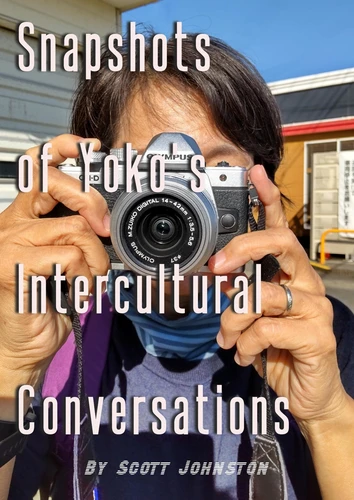
Snapshots of Yoko's Intercultural Conversations
Par :Formats :
Disponible dans votre compte client Decitre ou Furet du Nord dès validation de votre commande. Le format ePub est :
- Compatible avec une lecture sur My Vivlio (smartphone, tablette, ordinateur)
- Compatible avec une lecture sur liseuses Vivlio
- Pour les liseuses autres que Vivlio, vous devez utiliser le logiciel Adobe Digital Edition. Non compatible avec la lecture sur les liseuses Kindle, Remarkable et Sony
 , qui est-ce ?
Notre partenaire de plateforme de lecture numérique où vous retrouverez l'ensemble de vos ebooks gratuitement
Pour en savoir plus sur nos ebooks, consultez notre aide en ligne ici
C'est si simple ! Lisez votre ebook avec l'app Vivlio sur votre tablette, mobile ou ordinateur :

- FormatePub
- ISBN8215747100
- EAN9798215747100
- Date de parution19/02/2023
- Protection num.pas de protection
- Infos supplémentairesepub
- ÉditeurWMG Publishing
Résumé
In conversations with people from other countries, have you ever wondered, "Why does she take so long to answer?" or "Why doesn't she say what she wants?" On the other hand, the other person may be thinking, "Why is she so pushy?" Why does she talk too much?"This book contains numerous short conversations between Yoko, a Japanese woman, and Scott, an American living in Japan, and people from different countries and backgrounds.
Scott created these conversations while teaching intercultural communication in Japan for over 15 years. The conversations are divided into general topics, the world, family & friends, business & work, and superstitions. Some possible explanations of the causes of the miscommunication are included after each dialogue. In addition, at the end of the book, some key concepts are explained. Some of these are high & low context, time differences, Hofstede's cultural dimensions, and indirect & direct ways of communicating.
We often read about miscommunication without thinking about the causes. As a result, we are apt to make the same mistakes over and over. Thus, this book's short conversations can help the readers to focus on the miscommunication, due to different cultural norms.
Scott created these conversations while teaching intercultural communication in Japan for over 15 years. The conversations are divided into general topics, the world, family & friends, business & work, and superstitions. Some possible explanations of the causes of the miscommunication are included after each dialogue. In addition, at the end of the book, some key concepts are explained. Some of these are high & low context, time differences, Hofstede's cultural dimensions, and indirect & direct ways of communicating.
We often read about miscommunication without thinking about the causes. As a result, we are apt to make the same mistakes over and over. Thus, this book's short conversations can help the readers to focus on the miscommunication, due to different cultural norms.