SOLDES
Jusqu'à -70% sur une sélection d'articles*

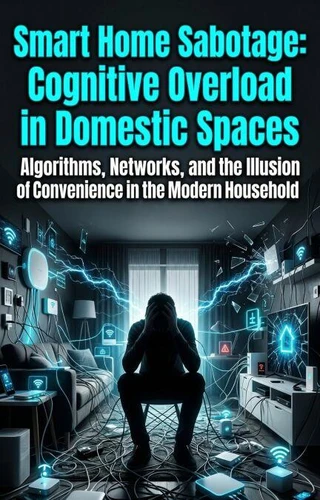
Smart Home Sabotage: Cognitive Overload in Domestic Spaces. Algorithms, Networks, and the Illusion of Convenience in the Modern Household
Par :Formats :
Disponible dans votre compte client Decitre ou Furet du Nord dès validation de votre commande. Le format ePub est :
- Compatible avec une lecture sur My Vivlio (smartphone, tablette, ordinateur)
- Compatible avec une lecture sur liseuses Vivlio
- Pour les liseuses autres que Vivlio, vous devez utiliser le logiciel Adobe Digital Edition. Non compatible avec la lecture sur les liseuses Kindle, Remarkable et Sony
 , qui est-ce ?
Notre partenaire de plateforme de lecture numérique où vous retrouverez l'ensemble de vos ebooks gratuitement
Pour en savoir plus sur nos ebooks, consultez notre aide en ligne ici
C'est si simple ! Lisez votre ebook avec l'app Vivlio sur votre tablette, mobile ou ordinateur :

- Nombre de pages205
- FormatePub
- ISBN978-3-565-35416-0
- EAN9783565354160
- Date de parution24/03/2026
- Protection num.pas de protection
- Taille808 Ko
- Infos supplémentairesepub
- ÉditeurEmphaloz Publishing House
Résumé
We were promised a utopian future where intelligent devices would seamlessly manage our homes, freeing up countless hours of precious leisure time. Instead, the modern consumer has been transformed into an unpaid systems administrator, trapped in an endless cycle of updates, connectivity errors, and incompatible network protocols.
The hidden reality of the Internet of Things is a staggering increase in invisible cognitive load.
By replacing simple, tactile mechanisms with complex digital ecosystems, tech companies have quietly shifted the burden of maintenance directly onto the user, generating chronic psychological exhaustion in our most private spaces. This investigation dissects the predatory architecture of domestic automation, exposing how smart refrigerators and voice assistants demand constant mental bandwidth.
It reveals the behavioral traps engineered into daily interfaces that force consumers to negotiate with algorithms just to turn on the lights or lock a door. Reclaim your domestic tranquility by understanding the psychological cost of hyper-connectivity, and learn how to dismantle the invisible digital burdens sabotaging your everyday life.
By replacing simple, tactile mechanisms with complex digital ecosystems, tech companies have quietly shifted the burden of maintenance directly onto the user, generating chronic psychological exhaustion in our most private spaces. This investigation dissects the predatory architecture of domestic automation, exposing how smart refrigerators and voice assistants demand constant mental bandwidth.
It reveals the behavioral traps engineered into daily interfaces that force consumers to negotiate with algorithms just to turn on the lights or lock a door. Reclaim your domestic tranquility by understanding the psychological cost of hyper-connectivity, and learn how to dismantle the invisible digital burdens sabotaging your everyday life.