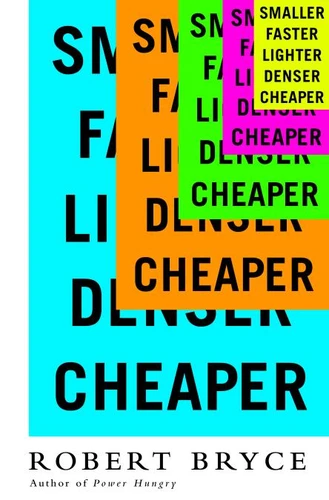
Smaller Faster Lighter Denser Cheaper. How Innovation Keeps Proving the Catastrophists Wrong
Par :Formats :
Disponible dans votre compte client Decitre ou Furet du Nord dès validation de votre commande. Le format ePub protégé est :
- Compatible avec une lecture sur My Vivlio (smartphone, tablette, ordinateur)
- Compatible avec une lecture sur liseuses Vivlio
- Pour les liseuses autres que Vivlio, vous devez utiliser le logiciel Adobe Digital Edition. Non compatible avec la lecture sur les liseuses Kindle, Remarkable et Sony
- Non compatible avec un achat hors France métropolitaine
 , qui est-ce ?
Notre partenaire de plateforme de lecture numérique où vous retrouverez l'ensemble de vos ebooks gratuitement
Pour en savoir plus sur nos ebooks, consultez notre aide en ligne ici
C'est si simple ! Lisez votre ebook avec l'app Vivlio sur votre tablette, mobile ou ordinateur :

- Nombre de pages400
- FormatePub
- ISBN978-1-61039-206-8
- EAN9781610392068
- Date de parution12/05/2014
- Protection num.Adobe DRM
- Infos supplémentairesepub
- ÉditeurPublicAffairs
Résumé
In the face of today's environmental and economic challenges, doomsayers preach that the only way to stave off disaster is for humans to reverse course: to de-industrialize, re-localize, ban the use of modern energy sources, and forswear prosperity. But in this provocative and optimistic rebuke to the catastrophists, Robert Bryce shows how innovation and the inexorable human desire to make things Smaller Faster Lighter Denser Cheaper is providing consumers with Cheaper and more abundant energy, Faster computing, Lighter vehicles, and myriad other goods.
That same desire is fostering unprecedented prosperity, greater liberty, and yes, better environmental protection. Utilizing on-the-ground reporting from Ottawa to Panama City and Pittsburgh to Bakersfield, Bryce shows how we have, for centuries, been pushing for Smaller Faster solutions to our problems. From the vacuum tube, mass-produced fertilizer, and the printing press to mobile phones, nanotech, and advanced drill rigs, Bryce demonstrates how cutting-edge companies and breakthrough technologies have created a world in which people are living longer, freer, healthier, lives than at any time in human history.
The push toward Smaller Faster Lighter Denser Cheaper is happening across multiple sectors. Bryce profiles innovative individuals and companies, from long-established ones like Ford and Intel to upstarts like Aquion Energy and Khan Academy. And he zeroes in on the energy industry, proving that the future belongs to the high power density sources that can provide the enormous quantities of energy the world demands.
The tools we need to save the planet aren't to be found in the technologies or lifestyles of the past. Nor must we sacrifice prosperity and human progress to ensure our survival. The catastrophists have been wrong since the days of Thomas Malthus. This is the time to embrace the innovators and businesses all over the world who are making things Smaller Faster Lighter Denser Cheaper.
That same desire is fostering unprecedented prosperity, greater liberty, and yes, better environmental protection. Utilizing on-the-ground reporting from Ottawa to Panama City and Pittsburgh to Bakersfield, Bryce shows how we have, for centuries, been pushing for Smaller Faster solutions to our problems. From the vacuum tube, mass-produced fertilizer, and the printing press to mobile phones, nanotech, and advanced drill rigs, Bryce demonstrates how cutting-edge companies and breakthrough technologies have created a world in which people are living longer, freer, healthier, lives than at any time in human history.
The push toward Smaller Faster Lighter Denser Cheaper is happening across multiple sectors. Bryce profiles innovative individuals and companies, from long-established ones like Ford and Intel to upstarts like Aquion Energy and Khan Academy. And he zeroes in on the energy industry, proving that the future belongs to the high power density sources that can provide the enormous quantities of energy the world demands.
The tools we need to save the planet aren't to be found in the technologies or lifestyles of the past. Nor must we sacrifice prosperity and human progress to ensure our survival. The catastrophists have been wrong since the days of Thomas Malthus. This is the time to embrace the innovators and businesses all over the world who are making things Smaller Faster Lighter Denser Cheaper.