
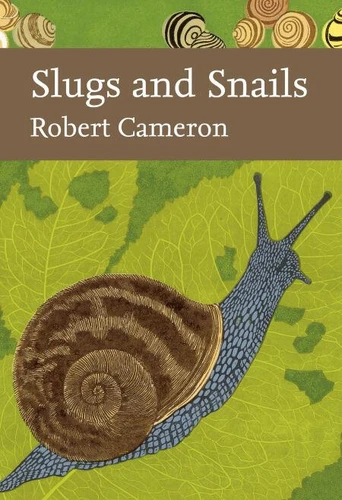
Slugs and Snails
Par :Formats :
Disponible dans votre compte client Decitre ou Furet du Nord dès validation de votre commande. Le format ePub protégé est :
- Compatible avec une lecture sur My Vivlio (smartphone, tablette, ordinateur)
- Compatible avec une lecture sur liseuses Vivlio
- Pour les liseuses autres que Vivlio, vous devez utiliser le logiciel Adobe Digital Edition. Non compatible avec la lecture sur les liseuses Kindle, Remarkable et Sony
- Non compatible avec un achat hors France métropolitaine
 , qui est-ce ?
Notre partenaire de plateforme de lecture numérique où vous retrouverez l'ensemble de vos ebooks gratuitement
Pour en savoir plus sur nos ebooks, consultez notre aide en ligne ici
C'est si simple ! Lisez votre ebook avec l'app Vivlio sur votre tablette, mobile ou ordinateur :

- Nombre de pages528
- FormatePub
- ISBN978-0-00-820349-8
- EAN9780008203498
- Date de parution15/12/2016
- Protection num.Adobe DRM
- Infos supplémentairesepub
- ÉditeurWilliam Collins
Résumé
Slugs and snails are part of the great Phylum Mollusca, a group that contains creatures as varied as the fast-moving squid or the sedentary clams, cockles and mussels. The largest group, however, are the gastropods, animals originally with a single foot and a single coiled shell.
They are the only group of molluscs to have representatives living on land as well as in the sea and freshwaters. This book is about the slugs and snails that live on land.
For creatures living on land they are bizarre: snails carry a huge weight of shell; both snails and slugs move slowly relative to their potential enemies; and most are not well camouflaged.
Their wet bodies are at the mercy of dry weather and their movement is very wasteful of energy and water. Despite all this, they are found from the tundra through to deserts, and on all continents apart from Antarctica. They have reached the most remote oceanic islands and undergone amazing evolutionary developments. In terms of species, they outnumber all land vertebrates. As pests, slugs and snails are all too familiar.
The damage that they can cause in our gardens and to agricultural crops can be considerable and they are remarkably tenacious and thus difficult to control. In this long-anticipated New Naturalist volume, Robert Cameron introduces us to this remarkable group of gastropods. While dealing with the natural history of slugs and snails of the British Isles it also ventures across the world to explore the wide range of structures and ways of life of slugs and snails, particularly their sometimes bizarre mating habits, which in turn help to illuminate the ways in which evolution has shaped the living world. Snails can be and have been used to explore important ideas in evolutionary biology, in biogeography and in ecology, and Cameron draws out these explorations, looking specifically at the role of evolution in determining how our understanding of snails has developed over the years.
Their wet bodies are at the mercy of dry weather and their movement is very wasteful of energy and water. Despite all this, they are found from the tundra through to deserts, and on all continents apart from Antarctica. They have reached the most remote oceanic islands and undergone amazing evolutionary developments. In terms of species, they outnumber all land vertebrates. As pests, slugs and snails are all too familiar.
The damage that they can cause in our gardens and to agricultural crops can be considerable and they are remarkably tenacious and thus difficult to control. In this long-anticipated New Naturalist volume, Robert Cameron introduces us to this remarkable group of gastropods. While dealing with the natural history of slugs and snails of the British Isles it also ventures across the world to explore the wide range of structures and ways of life of slugs and snails, particularly their sometimes bizarre mating habits, which in turn help to illuminate the ways in which evolution has shaped the living world. Snails can be and have been used to explore important ideas in evolutionary biology, in biogeography and in ecology, and Cameron draws out these explorations, looking specifically at the role of evolution in determining how our understanding of snails has developed over the years.