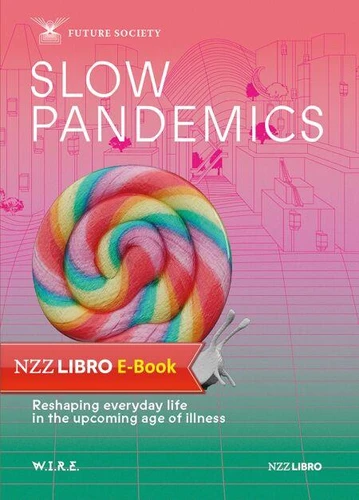
Slow Pandemics. Reshaping everyday life in the upcoming age of illness
Par :Formats :
Disponible dans votre compte client Decitre ou Furet du Nord dès validation de votre commande. Le format Epub fixed layout est :
- Compatible avec une lecture sur My Vivlio (smartphone, tablette, ordinateur)
- Compatible avec une lecture sur liseuses Vivlio
- Pour les liseuses autres que Vivlio, vous devez utiliser le logiciel Adobe Digital Edition. Non compatible avec la lecture sur les liseuses Kindle, Remarkable et Sony
 , qui est-ce ?
Notre partenaire de plateforme de lecture numérique où vous retrouverez l'ensemble de vos ebooks gratuitement
Pour en savoir plus sur nos ebooks, consultez notre aide en ligne ici
C'est si simple ! Lisez votre ebook avec l'app Vivlio sur votre tablette, mobile ou ordinateur :

- Nombre de pages140
- FormatEpub fixed layout
- ISBN978-3-907396-36-0
- EAN9783907396360
- Date de parution12/12/2022
- Protection num.Digital Watermarking
- Taille29 Mo
- Infos supplémentairesepub
- ÉditeurNZZ Libro
Résumé
Medical progress and greater prosperity have helped us to not only live longer, but also to stay healthy longer. However, the downsides of ever greater convenience are now becoming apparent: the next pandemic will be characterised by lifestyle-related diseases and - unlike the coronavirus - will spread slowly and without much media attention. A growing number of circulatory diseases, type 2 diabetes and cancer are part of the new normal, resulting from a modern lifestyle with less exercise and more fast food.
An increasing number of mental illnesses due to pressure to perform, loneliness and dependence on digital aids have become part of our daily life. Not only older people are affected but more and more young people also suffer from these symptoms. These "slow pandemics" arise in everyday life and cannot be treated by a hospital stay or a drug. They require a new healthcare system that focuses on daily life - and the involvement of all public and private actors who shape our environment and behaviour.
The focus on healthy lifestyles opens up new, interlinked markets for prevention - provided that society also assumes responsibility. The foundations are selective rather than a complete evaluation of behavioural data, and builds health-promoting infrastructure and redefines quality of life by combining control and enjoyment.
An increasing number of mental illnesses due to pressure to perform, loneliness and dependence on digital aids have become part of our daily life. Not only older people are affected but more and more young people also suffer from these symptoms. These "slow pandemics" arise in everyday life and cannot be treated by a hospital stay or a drug. They require a new healthcare system that focuses on daily life - and the involvement of all public and private actors who shape our environment and behaviour.
The focus on healthy lifestyles opens up new, interlinked markets for prevention - provided that society also assumes responsibility. The foundations are selective rather than a complete evaluation of behavioural data, and builds health-promoting infrastructure and redefines quality of life by combining control and enjoyment.
A propos de Stephan Sigrist



24,00 €