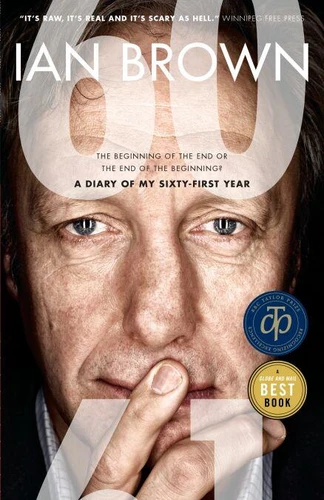
Sixty. A Diary of My Sixty-First Year
Par :Formats :
Disponible dans votre compte client Decitre ou Furet du Nord dès validation de votre commande. Le format ePub protégé est :
- Compatible avec une lecture sur My Vivlio (smartphone, tablette, ordinateur)
- Compatible avec une lecture sur liseuses Vivlio
- Pour les liseuses autres que Vivlio, vous devez utiliser le logiciel Adobe Digital Edition. Non compatible avec la lecture sur les liseuses Kindle, Remarkable et Sony
- Non compatible avec un achat hors France métropolitaine
 , qui est-ce ?
Notre partenaire de plateforme de lecture numérique où vous retrouverez l'ensemble de vos ebooks gratuitement
Pour en savoir plus sur nos ebooks, consultez notre aide en ligne ici
C'est si simple ! Lisez votre ebook avec l'app Vivlio sur votre tablette, mobile ou ordinateur :

- Nombre de pages304
- FormatePub
- ISBN978-0-307-36286-5
- EAN9780307362865
- Date de parution29/09/2015
- Protection num.Adobe DRM
- Taille2 Mo
- Infos supplémentairesepub
- ÉditeurRandom House Canada
Résumé
NATIONAL BESTSELLER FINALIST for the Hilary Weston Writers' Trust Prize for Non-FictionFINALIST for the RBC Taylor PrizeShortlisted for the Hilary Weston Writers' Trust Prize for Non-Fiction as well as a finalist for the RBC Taylor Prize, Sixty is a wickedly honest and brutally funny account of the year in which Ian Brown truly realized that the man in the mirror was...sixty. By the author of the multiple award-winning The Boy in the Moon.
Sixty is a report from the front, a dispatch from the Maginot Line that divides the middle-aged from the soon to be elderly. As Ian writes, "It is the age when the body begins to dominate the mind, or vice versa, when time begins to disappear and loom, but never in a good way, when you have no choice but to admit that people have stopped looking your way, and that in fact they stopped twenty years ago."Ian began keeping a diary with a Facebook post on the morning of February 4, 2014, his sixtieth birthday.
As well as keeping a running tally on how he survived the year, Ian explored what being sixty means physically, psychologically and intellectually. "What pleasures are gone forever? Which ones, if any, are left? What did Beethoven, or Schubert, or Jagger, or Henry Moore, or Lucien Freud do after they turned sixty?" And most importantly, "How much life can you live in the fourth quarter, not knowing when the game might end?"With formidable candour, he tries to answer this question: "Does aging and elderliness deserve to be dreaded--and how much of that dread can be held at bay by a reasonable human being?" For that matter, for a man of sixty, what even constitutes reasonableness?
Sixty is a report from the front, a dispatch from the Maginot Line that divides the middle-aged from the soon to be elderly. As Ian writes, "It is the age when the body begins to dominate the mind, or vice versa, when time begins to disappear and loom, but never in a good way, when you have no choice but to admit that people have stopped looking your way, and that in fact they stopped twenty years ago."Ian began keeping a diary with a Facebook post on the morning of February 4, 2014, his sixtieth birthday.
As well as keeping a running tally on how he survived the year, Ian explored what being sixty means physically, psychologically and intellectually. "What pleasures are gone forever? Which ones, if any, are left? What did Beethoven, or Schubert, or Jagger, or Henry Moore, or Lucien Freud do after they turned sixty?" And most importantly, "How much life can you live in the fourth quarter, not knowing when the game might end?"With formidable candour, he tries to answer this question: "Does aging and elderliness deserve to be dreaded--and how much of that dread can be held at bay by a reasonable human being?" For that matter, for a man of sixty, what even constitutes reasonableness?