SOLDES
Jusqu'à -70% sur une sélection d'articles*

Sisters of Mokama. The Pioneering Women Who Brought Hope and Healing to India
Par :Formats :
Disponible dans votre compte client Decitre ou Furet du Nord dès validation de votre commande. Le format ePub protégé est :
- Compatible avec une lecture sur My Vivlio (smartphone, tablette, ordinateur)
- Compatible avec une lecture sur liseuses Vivlio
- Pour les liseuses autres que Vivlio, vous devez utiliser le logiciel Adobe Digital Edition. Non compatible avec la lecture sur les liseuses Kindle, Remarkable et Sony
- Non compatible avec un achat hors France métropolitaine
 , qui est-ce ?
Notre partenaire de plateforme de lecture numérique où vous retrouverez l'ensemble de vos ebooks gratuitement
Pour en savoir plus sur nos ebooks, consultez notre aide en ligne ici
C'est si simple ! Lisez votre ebook avec l'app Vivlio sur votre tablette, mobile ou ordinateur :

- Nombre de pages384
- FormatePub
- ISBN978-0-525-52236-2
- EAN9780525522362
- Date de parution12/04/2022
- Protection num.Adobe DRM
- Taille4 Mo
- Infos supplémentairesepub
- ÉditeurViking
Résumé
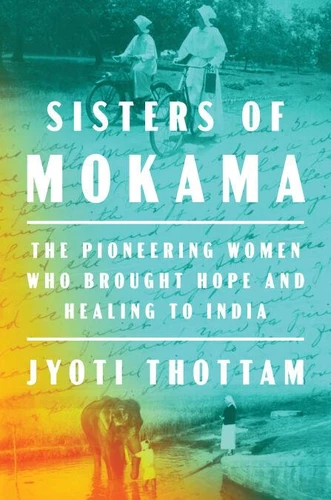
"Sisters of Mokama is proof that faith and courage does move mountains."-Abraham Verghese, author of Cutting for StoneThe never-before-told story of six intrepid Kentucky nuns, their journey to build a hospital in the poorest state in India, and the Indian nurses whose lives would never be the sameNew York Times editor Jyoti Thottam's mother was part of an extraordinary group of Indian women. Born in 1946, a time when few women dared to leave their house without the protection of a man, she left home by herself at just fifteen years old and traveled to Bihar-an impoverished and isolated state in northern India that had been one of the bloodiest regions of Partition-in order to train to be a nurse under the tutelage of the determined and resourceful Appalachian nuns who ran Nazareth Hospital.
Like Thottam's mother's journey, the hospital was a radical undertaking: it was run almost entirely by women, who insisted on giving the highest possible standard of care to everyone who walked through its doors, regardless of caste or religion. Fascinated by her mother's story, Thottam set out to discover the full story of Nazareth Hospital, which had been established in 1947 by six nuns from Kentucky.
With no knowledge of Hindi, and the awareness that they would likely never see their families again, the sisters had traveled to the small town of Mokama determined to live up to the pioneer spirit of their order, founded in the rough hills of the Kentucky frontier. A year later, they opened the doors of the hospital; soon they began taking in young Indian women as nursing students, offering them an opportunity that would change their lives.
One of those women, of course, was Thottam's mother. In Sisters of Mokama, Thottam draws upon twenty years' worth of research to tell this inspiring story for the first time. She brings to life the hopes, struggles, and accomplishments of these ordinary women-both American and Indian-who succeeded against the odds during the tumult and trauma of the years after World War II and Partition. Pain and loss were everywhere for the women of that time, but the collapse of the old orders provided the women of Nazareth Hospital with an opening-a chance to create for themselves lives that would never have been possible otherwise.
Like Thottam's mother's journey, the hospital was a radical undertaking: it was run almost entirely by women, who insisted on giving the highest possible standard of care to everyone who walked through its doors, regardless of caste or religion. Fascinated by her mother's story, Thottam set out to discover the full story of Nazareth Hospital, which had been established in 1947 by six nuns from Kentucky.
With no knowledge of Hindi, and the awareness that they would likely never see their families again, the sisters had traveled to the small town of Mokama determined to live up to the pioneer spirit of their order, founded in the rough hills of the Kentucky frontier. A year later, they opened the doors of the hospital; soon they began taking in young Indian women as nursing students, offering them an opportunity that would change their lives.
One of those women, of course, was Thottam's mother. In Sisters of Mokama, Thottam draws upon twenty years' worth of research to tell this inspiring story for the first time. She brings to life the hopes, struggles, and accomplishments of these ordinary women-both American and Indian-who succeeded against the odds during the tumult and trauma of the years after World War II and Partition. Pain and loss were everywhere for the women of that time, but the collapse of the old orders provided the women of Nazareth Hospital with an opening-a chance to create for themselves lives that would never have been possible otherwise.