
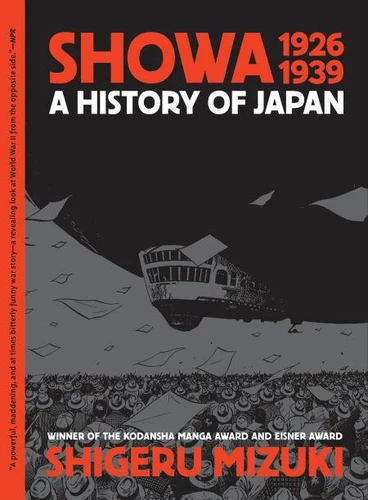
Showa
Par :Formats :
Disponible dans votre compte client Decitre ou Furet du Nord dès validation de votre commande. Le format Epub fixed layout protégé est :
- Compatible avec une lecture sur My Vivlio (smartphone, tablette, ordinateur)
- Compatible avec une lecture sur liseuses Vivlio
- Pour les liseuses autres que Vivlio, vous devez utiliser le logiciel Adobe Digital Edition. Non compatible avec la lecture sur les liseuses Kindle, Remarkable et Sony
- Non compatible avec un achat hors France métropolitaine
 , qui est-ce ?
Notre partenaire de plateforme de lecture numérique où vous retrouverez l'ensemble de vos ebooks gratuitement
Pour en savoir plus sur nos ebooks, consultez notre aide en ligne ici
C'est si simple ! Lisez votre ebook avec l'app Vivlio sur votre tablette, mobile ou ordinateur :

- Nombre de pages560
- FormatEpub fixed layout
- ISBN978-1-77046-470-4
- EAN9781770464704
- Date de parution17/03/2021
- Protection num.Adobe DRM
- Taille185 Mo
- Infos supplémentairesepub
- ÉditeurDrawn and Quarterly
Résumé
A fascinating period in Japanese history recounted by manga's most distinguished authorShowa 1926-1939: A History of Japan lays the groundwork for Eisner award-winning author Shigeru Mizuki's historical and autobiographical series about Japanese life in the twentieth century. Depicted against his trademark photorealistic backdrops, Mizuki effortlessly portrays a nation forced into a period of upheaval and brings history into the realm of the personal.
Indeed, as a child coming of age in the Showa era, the author's earliest memories coincide with key events of the time. It all begins with the Great Kanto Earthquake, a natural disaster that forces the country into a financial crisis. The period leading up to World War II is thus a time of economic hardship and record unemployment. Forthright descriptions of ensuing militarization reveal Mizuki's lifelong stance as a thoughtful pacifist, critical of domestically disputed events like the Nanjing Massacre clearly painted here as an atrocity.
This first volume in a four-part series is a captivating historical portrait tracking the industrial and societal developments that would come to shape Japan's foreign policy in the interwar period.
Indeed, as a child coming of age in the Showa era, the author's earliest memories coincide with key events of the time. It all begins with the Great Kanto Earthquake, a natural disaster that forces the country into a financial crisis. The period leading up to World War II is thus a time of economic hardship and record unemployment. Forthright descriptions of ensuing militarization reveal Mizuki's lifelong stance as a thoughtful pacifist, critical of domestically disputed events like the Nanjing Massacre clearly painted here as an atrocity.
This first volume in a four-part series is a captivating historical portrait tracking the industrial and societal developments that would come to shape Japan's foreign policy in the interwar period.
A propos de Shigeru Mizuki

35,50 €

Akumakun Tome 2
Album
17,50 €

Akumakun Tome 1
Album
18,50 €

5/5
4.3/5
NonNonBa
E-book
12,74 €
35,50 €

5/5
4/5
34,50 €
16,50 €
32,50 €

3/5
35,50 €
3/5
Hitler
Album
26,50 €
16,50 €

11,76 €

22,56 €
22,56 €
12,74 €
12,74 €

Showa 1944-1953
E-book
12,74 €
12,74 €