OFFRE LISEUSES
Une liseuse achetée = une housse offerte* jusqu'au 21 juin

Nouveauté
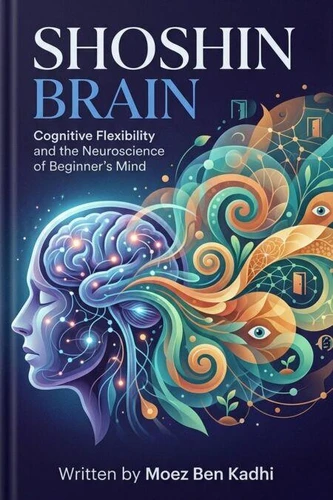
Shoshin Brain
Par :Formats :
Actuellement indisponible
Cet article est actuellement indisponible, il ne peut pas être commandé sur notre site pour le moment. Nous vous invitons à vous inscrire à l'alerte disponibilité, vous recevrez un e-mail dès que cet ouvrage sera à nouveau disponible.
Disponible dans votre compte client Decitre ou Furet du Nord dès validation de votre commande. Le format ePub est :
- Compatible avec une lecture sur My Vivlio (smartphone, tablette, ordinateur)
- Compatible avec une lecture sur liseuses Vivlio
- Pour les liseuses autres que Vivlio, vous devez utiliser le logiciel Adobe Digital Edition. Non compatible avec la lecture sur les liseuses Kindle, Remarkable et Sony
 , qui est-ce ?
Notre partenaire de plateforme de lecture numérique où vous retrouverez l'ensemble de vos ebooks gratuitement
Pour en savoir plus sur nos ebooks, consultez notre aide en ligne ici
C'est si simple ! Lisez votre ebook avec l'app Vivlio sur votre tablette, mobile ou ordinateur :

- FormatePub
- ISBN8235617438
- EAN9798235617438
- Date de parution20/04/2026
- Protection num.pas de protection
- Infos supplémentairesepub
- ÉditeurIoakim Ioakim
Résumé
There is a moment in human cognition that rarely announces itself. It does not arrive as insight or revelation, but as a quiet narrowing. What once felt open, uncertain, and full of possibility begins to feel structured, familiar, and increasingly automatic. The mind becomes efficient. And in becoming efficient, it also becomes selective, sometimes excessively so. This book begins from a simple but uncomfortable observation: what we call expertise is often indistinguishable from a well-organized form of cognitive limitation.
The expert sees faster, decides quicker, and recognizes patterns with remarkable precision. Yet beneath this apparent advantage lies a subtle trade-off. The more stable a mental model becomes, the less it is questioned. The more reliable a pattern becomes, the less it is re-examined. Over time, the mind may cease to explore not because it cannot, but because it has learned not to. In contrast stands a very different mode of cognition, traditionally described in Zen philosophy as shoshin, the "beginner's mind." This is not ignorance, nor lack of experience, but a deliberate suspension of closure.
It is a cognitive posture in which perception remains open longer than necessary, and interpretation is delayed in favor of exploration. Modern neuroscience offers a complementary lens for understanding this phenomenon. The brain is not a passive recorder of reality, but a predictive system, constantly optimizing for efficiency, compression, and reduced uncertainty. What we experience as "understanding" is often the brain's successful reduction of informational complexity into stable models.
These models are powerful, but they come at a cost: stability reduces sensitivity to novelty.
The expert sees faster, decides quicker, and recognizes patterns with remarkable precision. Yet beneath this apparent advantage lies a subtle trade-off. The more stable a mental model becomes, the less it is questioned. The more reliable a pattern becomes, the less it is re-examined. Over time, the mind may cease to explore not because it cannot, but because it has learned not to. In contrast stands a very different mode of cognition, traditionally described in Zen philosophy as shoshin, the "beginner's mind." This is not ignorance, nor lack of experience, but a deliberate suspension of closure.
It is a cognitive posture in which perception remains open longer than necessary, and interpretation is delayed in favor of exploration. Modern neuroscience offers a complementary lens for understanding this phenomenon. The brain is not a passive recorder of reality, but a predictive system, constantly optimizing for efficiency, compression, and reduced uncertainty. What we experience as "understanding" is often the brain's successful reduction of informational complexity into stable models.
These models are powerful, but they come at a cost: stability reduces sensitivity to novelty.