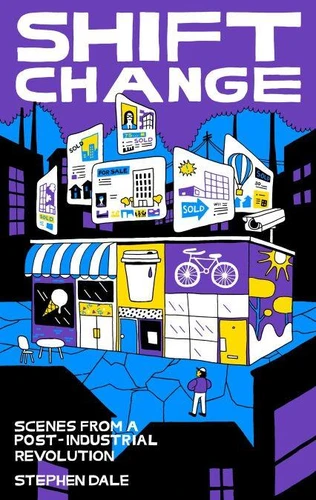
Shift Change. Scenes from a Post-industrial Revolution
Par :Formats :
Disponible dans votre compte client Decitre ou Furet du Nord dès validation de votre commande. Le format ePub est :
- Compatible avec une lecture sur My Vivlio (smartphone, tablette, ordinateur)
- Compatible avec une lecture sur liseuses Vivlio
- Pour les liseuses autres que Vivlio, vous devez utiliser le logiciel Adobe Digital Edition. Non compatible avec la lecture sur les liseuses Kindle, Remarkable et Sony
 , qui est-ce ?
Notre partenaire de plateforme de lecture numérique où vous retrouverez l'ensemble de vos ebooks gratuitement
Pour en savoir plus sur nos ebooks, consultez notre aide en ligne ici
C'est si simple ! Lisez votre ebook avec l'app Vivlio sur votre tablette, mobile ou ordinateur :

- Nombre de pages252
- FormatePub
- ISBN978-1-77113-554-2
- EAN9781771135542
- Date de parution04/10/2021
- Protection num.Digital Watermarking
- Taille1 Mo
- Infos supplémentairesepub
- ÉditeurBetween the Lines
Résumé
Hamilton's industrial age is over. In the steel capital of Canada, there are no more skies lit red by foundries at sunset, no more traffic jams at shift change. Instead, an urban renaissance is taking shape. But who wins and who loses in the city's not-too-distant future? Is it possible to lift a downtrodden, post-industrial city out of poverty in a way that benefits people across the social spectrum, not just a wealthy elite? In Shift Change, author Stephen Dale sets up "the Hammer" as a battlefield, a laboratory, a chessboard.
As investors cash in on a real estate gold rush and the all-too-familiar wheels of gentrification begin to turn, there's still a rare opportunity for both old-guard and newcomer Hamiltonians to come together and write a different story-one in which Steeltown becomes an economically diverse and inclusive urban centre for all. What plays out in these pages and at this very moment is a real-time case study that will capture the attention and the imagination of anyone interested in equitable redevelopment, housing activism, and social justice in the North American city.
As investors cash in on a real estate gold rush and the all-too-familiar wheels of gentrification begin to turn, there's still a rare opportunity for both old-guard and newcomer Hamiltonians to come together and write a different story-one in which Steeltown becomes an economically diverse and inclusive urban centre for all. What plays out in these pages and at this very moment is a real-time case study that will capture the attention and the imagination of anyone interested in equitable redevelopment, housing activism, and social justice in the North American city.