Katherine A. H. Graham has been an active scholar on Indigenous and Northern issues for over four decades. She served in several senior research and policy roles with the Royal Commission on Aboriginal Peoples.
David Newhouse is Professor of Indigenous Studies and Director of the Chanie Wenjack School for Indigenous Studies at Trent University. He was a member of the policy team on economics for the Royal Commission on Aboriginal Peoples.
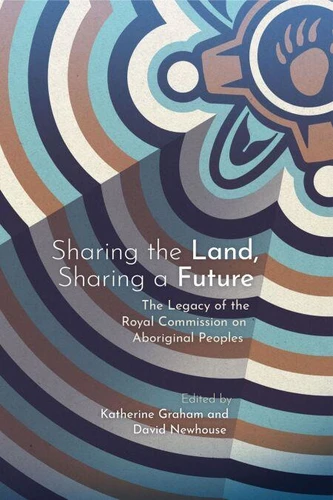
Sharing the Land, Sharing a Future. The Legacy of the Royal Commission on Aboriginal Peoples
Par : ,Formats :
Disponible dans votre compte client Decitre ou Furet du Nord dès validation de votre commande. Le format ePub est :
- Compatible avec une lecture sur My Vivlio (smartphone, tablette, ordinateur)
- Compatible avec une lecture sur liseuses Vivlio
- Pour les liseuses autres que Vivlio, vous devez utiliser le logiciel Adobe Digital Edition. Non compatible avec la lecture sur les liseuses Kindle, Remarkable et Sony
 , qui est-ce ?
Notre partenaire de plateforme de lecture numérique où vous retrouverez l'ensemble de vos ebooks gratuitement
Pour en savoir plus sur nos ebooks, consultez notre aide en ligne ici
C'est si simple ! Lisez votre ebook avec l'app Vivlio sur votre tablette, mobile ou ordinateur :

- Nombre de pages512
- FormatePub
- ISBN978-0-88755-869-6
- EAN9780887558696
- Date de parution11/06/2021
- Protection num.Digital Watermarking
- Taille1 Mo
- Infos supplémentairesepub
- ÉditeurUniversity of Manitoba Press
Résumé
Sharing the Land, Sharing a Future looks to both the past and the future as it examines the foundational work of the Royal Commission on Aboriginal Peoples (RCAP) and the legacy of its 1996 report. It assesses the Commission's influence on subsequent milestones in Indigenous-Canada relations and considers our prospects for a constructive future.
RCAP's five-year examination of the relationships of First Nations, Metis, and Inuit peoples to Canada and to non-Indigenous Canadians resulted in a new vision for Canada and provided 440 specific recommendations, many of which informed the subsequent work of the Truth and Reconciliation Commission of Canada (TRC).
Considered too radical and difficult to implement, RCAP's recommendations were largely ignored, but the TRC reiterates that longstanding inequalities and imbalances in Canada's relationship with Indigenous peoples remain and quite literally calls us to action. With reflections on RCAP's legacy by its co-chairs, leaders of national Indigenous organizations and the Minister of Crown-Indigenous Relations, and leading academics and activists, this collection refocuses our attention on the groundbreaking work already performed by RCAP.
Organized thematically, it explores avenues by which we may establish a new relationship, build healthy and powerful communities, engage citizens, and move to action.
Considered too radical and difficult to implement, RCAP's recommendations were largely ignored, but the TRC reiterates that longstanding inequalities and imbalances in Canada's relationship with Indigenous peoples remain and quite literally calls us to action. With reflections on RCAP's legacy by its co-chairs, leaders of national Indigenous organizations and the Minister of Crown-Indigenous Relations, and leading academics and activists, this collection refocuses our attention on the groundbreaking work already performed by RCAP.
Organized thematically, it explores avenues by which we may establish a new relationship, build healthy and powerful communities, engage citizens, and move to action.