SOLDES
Jusqu'à -70% sur une sélection d'articles*

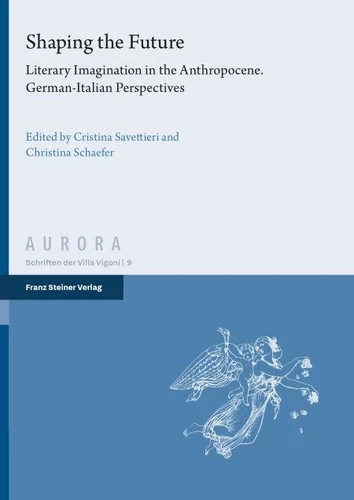
Shaping the Future. Literary Imagination in the Anthropocene. German-Italian Perspectives
Par : ,Formats :
Disponible dans votre compte client Decitre ou Furet du Nord dès validation de votre commande. Le format PDF est :
- Compatible avec une lecture sur My Vivlio (smartphone, tablette, ordinateur)
- Compatible avec une lecture sur liseuses Vivlio
- Pour les liseuses autres que Vivlio, vous devez utiliser le logiciel Adobe Digital Edition. Non compatible avec la lecture sur les liseuses Kindle, Remarkable et Sony
 , qui est-ce ?
Notre partenaire de plateforme de lecture numérique où vous retrouverez l'ensemble de vos ebooks gratuitement
Pour en savoir plus sur nos ebooks, consultez notre aide en ligne ici
C'est si simple ! Lisez votre ebook avec l'app Vivlio sur votre tablette, mobile ou ordinateur :

- Nombre de pages270
- FormatPDF
- ISBN978-3-515-13934-2
- EAN9783515139342
- Date de parution04/06/2025
- Protection num.Digital Watermarking
- Taille2 Mo
- Infos supplémentairespdf
- ÉditeurFranz Steiner
Résumé
In view of the global crisis triggered by climate change and other ecological problems of the Anthropocene, there is growing concern that the age of humans on Earth could be coming to an end. The question of the future of the human species on the planet and its scope for action has been a source of debate in literature for a long time. This volume shows that literature helps us to understand the future not simply as a time to come, but as a realm of potential and change.
It reflects on how literature casts new perspectives on traditional concepts and relationships such as human/environment, nature/culture or past/future. The contributions collected in this volume bring together German and Italian perspectives and draw from different disciplines (e.g., literary criticism, philosophy, psychoanalysis). They examine different cultural contexts (in Europe, America, and Africa) and focus on periods of literary history, ranging from Romanticism to the 21st century.
They all outline an idea of how we can imagine the future beyond the extremes of a blind belief in progress on the one hand and the fear of catastrophe on the other.
It reflects on how literature casts new perspectives on traditional concepts and relationships such as human/environment, nature/culture or past/future. The contributions collected in this volume bring together German and Italian perspectives and draw from different disciplines (e.g., literary criticism, philosophy, psychoanalysis). They examine different cultural contexts (in Europe, America, and Africa) and focus on periods of literary history, ranging from Romanticism to the 21st century.
They all outline an idea of how we can imagine the future beyond the extremes of a blind belief in progress on the one hand and the fear of catastrophe on the other.