
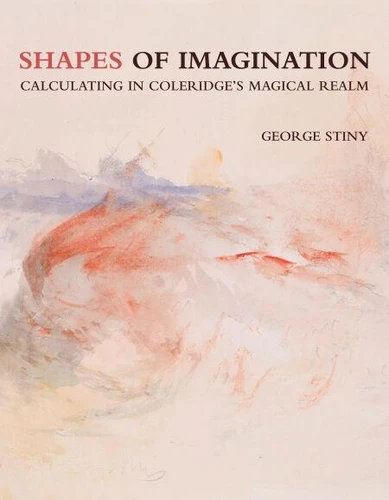
Shapes of Imagination. Calculating in Coleridge's Magical Realm
Par :Formats :
Disponible dans votre compte client Decitre ou Furet du Nord dès validation de votre commande. Le format ePub protégé est :
- Compatible avec une lecture sur My Vivlio (smartphone, tablette, ordinateur)
- Compatible avec une lecture sur liseuses Vivlio
- Pour les liseuses autres que Vivlio, vous devez utiliser le logiciel Adobe Digital Edition. Non compatible avec la lecture sur les liseuses Kindle, Remarkable et Sony
- Non compatible avec un achat hors France métropolitaine
 , qui est-ce ?
Notre partenaire de plateforme de lecture numérique où vous retrouverez l'ensemble de vos ebooks gratuitement
Pour en savoir plus sur nos ebooks, consultez notre aide en ligne ici
C'est si simple ! Lisez votre ebook avec l'app Vivlio sur votre tablette, mobile ou ordinateur :

- Nombre de pages248
- FormatePub
- ISBN978-0-262-37066-0
- EAN9780262370660
- Date de parution15/11/2022
- Protection num.Adobe DRM
- Taille4 Mo
- Infos supplémentairesepub
- ÉditeurThe MIT Press
Résumé
Visual calculating in shape grammars aligns with art and design, bridging the gap between seeing (Coleridge's "imagination") and combinatoric play (Coleridge's "fancy"). In Shapes of Imagination, George Stiny runs visual calculating in shape grammars through art and design-incorporating Samuel Taylor Coleridge's poetic imagination and Oscar Wilde's corollary to see things as they aren't. Many assume that calculating limits art and design to suit computers, but shape grammars rely on seeing to prove otherwise.
Rules that change what they see extend calculating to overtake what computers can do, in logic and with data and learning. Shape grammars bridge the divide between seeing (Coleridge's "imagination, or esemplastic power") and combinatoric play (Coleridge's "fancy"). Stiny shows that calculating without seeing excludes art and design. Seeing is key for calculating to augment creative activity with aesthetic insight and value.
Shape grammars go by appearances, in a full-fledged aesthetic enterprise for the inconstant eye; they answer the question of what calculating would be like if Turing and von Neumann were artists instead of logicians. Art and design are calculating in all their splendid detail.
Rules that change what they see extend calculating to overtake what computers can do, in logic and with data and learning. Shape grammars bridge the divide between seeing (Coleridge's "imagination, or esemplastic power") and combinatoric play (Coleridge's "fancy"). Stiny shows that calculating without seeing excludes art and design. Seeing is key for calculating to augment creative activity with aesthetic insight and value.
Shape grammars go by appearances, in a full-fledged aesthetic enterprise for the inconstant eye; they answer the question of what calculating would be like if Turing and von Neumann were artists instead of logicians. Art and design are calculating in all their splendid detail.