Rachel Simmons is an English-language nonfiction author recognized for her thoughtful explorations of psychology, relationships, and the emotional architecture of everyday life. Her writing combines compassionate insight with clear analysis, examining how memory, identity, communication, and personal expectations shape the way people connect with one another. Rachel's work is known for its reflective tone and emotional intelligence, creating books that feel both deeply personal and quietly universal.
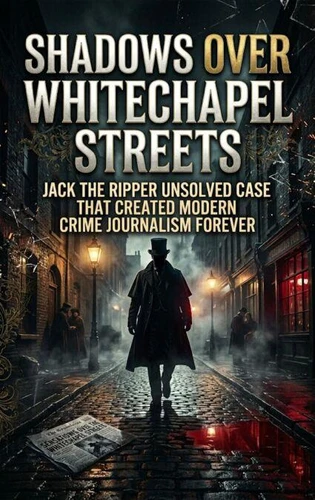
Shadows Over Whitechapel Streets. Jack the Ripper Unsolved Case That Created Modern Crime Journalism Forever
Par :Formats :
Disponible dans votre compte client Decitre ou Furet du Nord dès validation de votre commande. Le format ePub est :
- Compatible avec une lecture sur My Vivlio (smartphone, tablette, ordinateur)
- Compatible avec une lecture sur liseuses Vivlio
- Pour les liseuses autres que Vivlio, vous devez utiliser le logiciel Adobe Digital Edition. Non compatible avec la lecture sur les liseuses Kindle, Remarkable et Sony
 , qui est-ce ?
Notre partenaire de plateforme de lecture numérique où vous retrouverez l'ensemble de vos ebooks gratuitement
Pour en savoir plus sur nos ebooks, consultez notre aide en ligne ici
C'est si simple ! Lisez votre ebook avec l'app Vivlio sur votre tablette, mobile ou ordinateur :

- Nombre de pages219
- FormatePub
- ISBN978-3-565-45535-5
- EAN9783565455355
- Date de parution23/05/2026
- Protection num.pas de protection
- Taille2 Mo
- Infos supplémentairesepub
- ÉditeurEmphaloz Publishing House
Résumé
This book explores how the lingering shadows of Whitechapel's unsolved murders shaped the birth of modern crime journalism, tracing the uneasy relationship between public fear and press sensationalism that transformed a Victorian mystery into a lasting framework for reporting and consuming violent crime. The Ripper killings emerged during the rapid expansion of rotary press printing and cheaper paper production, enabling newspapers to publish multiple editions daily and send reporters directly into Whitechapel for near real time coverage.
In this environment, crime reporting evolved into one of the earliest true crime beats, where journalists blended eyewitness accounts, police rumors, and street speculation to satisfy a growing readership hungry for dramatic updates. At the same time, the Metropolitan Police's reluctance to release investigative details pushed newspapers toward anonymous letters, speculative narratives, and sensational imagery.
The infamous "Dear Boss" letter became part of a larger media spectacle in which the investigation itself turned into a form of public participation, blurring the line between documented fact and narrative invention. Through this process, crime reporting shifted from simple information delivery into serialized storytelling shaped by suspense, fear, and public imagination. Illustrated newspapers further amplified this transformation through wood engraved scenes that visualized Whitechapel's streets, victims, and atmosphere for middle class audiences far removed from the district itself.
These images established an enduring visual language of criminality and urban danger that later crime journalism would repeatedly reuse to evoke moral panic and social anxiety.
In this environment, crime reporting evolved into one of the earliest true crime beats, where journalists blended eyewitness accounts, police rumors, and street speculation to satisfy a growing readership hungry for dramatic updates. At the same time, the Metropolitan Police's reluctance to release investigative details pushed newspapers toward anonymous letters, speculative narratives, and sensational imagery.
The infamous "Dear Boss" letter became part of a larger media spectacle in which the investigation itself turned into a form of public participation, blurring the line between documented fact and narrative invention. Through this process, crime reporting shifted from simple information delivery into serialized storytelling shaped by suspense, fear, and public imagination. Illustrated newspapers further amplified this transformation through wood engraved scenes that visualized Whitechapel's streets, victims, and atmosphere for middle class audiences far removed from the district itself.
These images established an enduring visual language of criminality and urban danger that later crime journalism would repeatedly reuse to evoke moral panic and social anxiety.