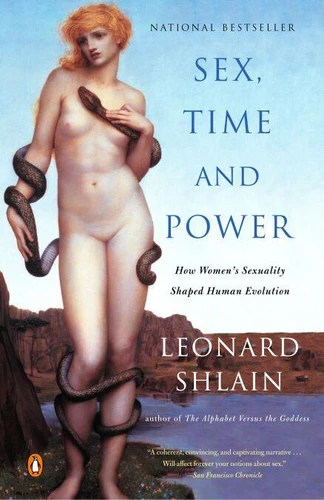
Sex, Time, and Power. How Women's Sexuality Shaped Human Evolution
Par :Formats :
Disponible dans votre compte client Decitre ou Furet du Nord dès validation de votre commande. Le format ePub protégé est :
- Compatible avec une lecture sur My Vivlio (smartphone, tablette, ordinateur)
- Compatible avec une lecture sur liseuses Vivlio
- Pour les liseuses autres que Vivlio, vous devez utiliser le logiciel Adobe Digital Edition. Non compatible avec la lecture sur les liseuses Kindle, Remarkable et Sony
- Non compatible avec un achat hors France métropolitaine
 , qui est-ce ?
Notre partenaire de plateforme de lecture numérique où vous retrouverez l'ensemble de vos ebooks gratuitement
Pour en savoir plus sur nos ebooks, consultez notre aide en ligne ici
C'est si simple ! Lisez votre ebook avec l'app Vivlio sur votre tablette, mobile ou ordinateur :

- Nombre de pages464
- FormatePub
- ISBN1-101-20039-1
- EAN9781101200391
- Date de parution03/08/2004
- Protection num.Adobe DRM
- Taille4 Mo
- Infos supplémentairesepub
- ÉditeurPenguin Books
Résumé
As in the bestselling The Alphabet Versus the Goddess, Leonard Shlain's provocative new book promises to change the way readers view themselves and where they came from. Sex, Time, and Power offers a tantalizing answer to an age-old question: Why did big-brained Homo sapiens suddenly emerge some 150, 000 years ago? The key, according to Shlain, is female sexuality. Drawing on an awesome breadth of research, he shows how, long ago, the narrowness of the newly bipedal human female's pelvis and the increasing size of infants' heads precipitated a crisis for the species.
Natural selection allowed for the adaptation of the human female to this environmental stress by reconfiguring her hormonal cycles, entraining them with the periodicity of the moon. The results, however, did much more than ensure our existence; they imbued women with the concept of time, and gave them control over sex-a power that males sought to reclaim. And the possibility of achieving immortality through heirs drove men to construct patriarchal cultures that went on to dominate so much of human history.
From the nature of courtship to the evolution of language, Shlain's brilliant and wide-ranging exploration stimulates new thinking about very old matters.
Natural selection allowed for the adaptation of the human female to this environmental stress by reconfiguring her hormonal cycles, entraining them with the periodicity of the moon. The results, however, did much more than ensure our existence; they imbued women with the concept of time, and gave them control over sex-a power that males sought to reclaim. And the possibility of achieving immortality through heirs drove men to construct patriarchal cultures that went on to dominate so much of human history.
From the nature of courtship to the evolution of language, Shlain's brilliant and wide-ranging exploration stimulates new thinking about very old matters.