This is not a forecast. Most of it has already happened. Britain's fertility rate fell below replacement in 1973 and has never been back - fifty-three years, and not one prime minister has mentioned it. In 2025 there were 585, 396 births in England and Wales, the fewest since 1977. Around ninety London schools have already closed or merged for want of children. Adult social care lost 85, 000 posts filled by British workers in two years - not by 2040, in the last two years.
And in March 2026 the country that supplies more of the world's nurses and carers than any other reported a fertility rate of 1.7. Nobody chose this. There is no villain and no conspiracy. There is a mechanism, and this book takes it apart - starting in Britain, because that is where the records are, and then across every country running a version of the same problem. Which is now almost all of them.
The countries that tried hardest are not the ones holding up:- South Korea spent two hundred billion dollars and recorded the lowest birth rate ever measured in peacetime. - France has run continuous family policy since 1939 - and in 2025 buried more people than it delivered. - The Nordic countries stripped away more of the cost of a child than anywhere on earth, and have some of the widest gaps of all.
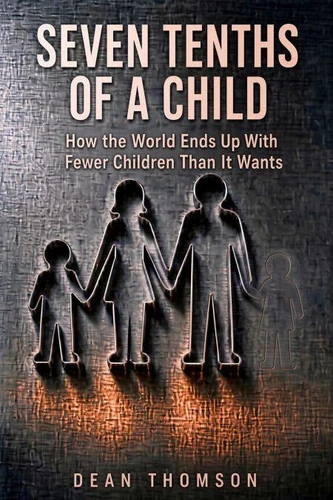
- Hungary spends five per cent of national income on it, and sits exactly where Britain sits. Ask people how many children they want and the answer has not changed in forty years: two. Then look around. It is fewer. Britain wants 2.1 and gets 1.39 - seven tenths of a child, every generation. Six things in the historical record do hold a birth rate up, and they have one thing in common. The most reliable of all is one this book rules out - because of what it takes back, and who fought to win it.
What it proposes instead is a sequence: that reaching a child happens in stages, in order, and that the first stage broke about thirty years ago while everybody was watching the last one. And the answer everybody reaches for is running out. A quarter of Britain's nurses hold a foreign passport, and the two largest sources are India and the Philippines. Both are now below replacement. Italy has authorised nearly half a million work visas; Japan faces a shortfall of 570, 000 care workers by 2040; Germany takes four hundred thousand a year.
Everybody is bidding for the same shrinking group of people, and everybody's plan assumes they will win. Before publication the argument was sent to five of the leading demographers and writers in the field. Two of them, independently, found the same hole in it within a day of each other - and a chapter exists to answer them, with the objection printed intact. At least two disagree with its central argument.
None of them would have written it either, and not because they lack the ability. The discipline will not let them. A journal will not print a hunch, a freedom of information request, or a correction to your own earlier draft. It is not a book about blame. Every change that produced this - children surviving, school lasting longer, women free to decide - is a victory nobody would give back. That is exactly what makes it hard.
Fifty-one chapters in seven parts. Every figure sourced. Every claim graded for confidence, including the ones that are argument rather than established fact. Ten questions the book could not answer are printed as open questions, with the study that would settle each. And thirty-eight corrections are printed at the back, not quietly applied. If you want the numbers straight, the sourcing shown, and nobody to blame - start here.
This is not a forecast. Most of it has already happened. Britain's fertility rate fell below replacement in 1973 and has never been back - fifty-three years, and not one prime minister has mentioned it. In 2025 there were 585, 396 births in England and Wales, the fewest since 1977. Around ninety London schools have already closed or merged for want of children. Adult social care lost 85, 000 posts filled by British workers in two years - not by 2040, in the last two years.
And in March 2026 the country that supplies more of the world's nurses and carers than any other reported a fertility rate of 1.7. Nobody chose this. There is no villain and no conspiracy. There is a mechanism, and this book takes it apart - starting in Britain, because that is where the records are, and then across every country running a version of the same problem. Which is now almost all of them.
The countries that tried hardest are not the ones holding up:- South Korea spent two hundred billion dollars and recorded the lowest birth rate ever measured in peacetime. - France has run continuous family policy since 1939 - and in 2025 buried more people than it delivered. - The Nordic countries stripped away more of the cost of a child than anywhere on earth, and have some of the widest gaps of all.
- Hungary spends five per cent of national income on it, and sits exactly where Britain sits. Ask people how many children they want and the answer has not changed in forty years: two. Then look around. It is fewer. Britain wants 2.1 and gets 1.39 - seven tenths of a child, every generation. Six things in the historical record do hold a birth rate up, and they have one thing in common. The most reliable of all is one this book rules out - because of what it takes back, and who fought to win it.
What it proposes instead is a sequence: that reaching a child happens in stages, in order, and that the first stage broke about thirty years ago while everybody was watching the last one. And the answer everybody reaches for is running out. A quarter of Britain's nurses hold a foreign passport, and the two largest sources are India and the Philippines. Both are now below replacement. Italy has authorised nearly half a million work visas; Japan faces a shortfall of 570, 000 care workers by 2040; Germany takes four hundred thousand a year.
Everybody is bidding for the same shrinking group of people, and everybody's plan assumes they will win. Before publication the argument was sent to five of the leading demographers and writers in the field. Two of them, independently, found the same hole in it within a day of each other - and a chapter exists to answer them, with the objection printed intact. At least two disagree with its central argument.
None of them would have written it either, and not because they lack the ability. The discipline will not let them. A journal will not print a hunch, a freedom of information request, or a correction to your own earlier draft. It is not a book about blame. Every change that produced this - children surviving, school lasting longer, women free to decide - is a victory nobody would give back. That is exactly what makes it hard.
Fifty-one chapters in seven parts. Every figure sourced. Every claim graded for confidence, including the ones that are argument rather than established fact. Ten questions the book could not answer are printed as open questions, with the study that would settle each. And thirty-eight corrections are printed at the back, not quietly applied. If you want the numbers straight, the sourcing shown, and nobody to blame - start here.


 , qui est-ce ?