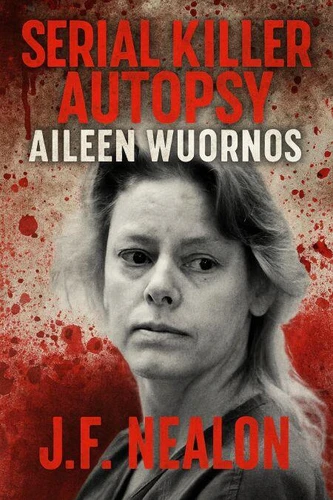
Serial Killer Autopsy: Aileen Wuornos. Serial Killer Autopsy, #5
Par :Formats :
Disponible dans votre compte client Decitre ou Furet du Nord dès validation de votre commande. Le format ePub est :
- Compatible avec une lecture sur My Vivlio (smartphone, tablette, ordinateur)
- Compatible avec une lecture sur liseuses Vivlio
- Pour les liseuses autres que Vivlio, vous devez utiliser le logiciel Adobe Digital Edition. Non compatible avec la lecture sur les liseuses Kindle, Remarkable et Sony
 , qui est-ce ?
Notre partenaire de plateforme de lecture numérique où vous retrouverez l'ensemble de vos ebooks gratuitement
Pour en savoir plus sur nos ebooks, consultez notre aide en ligne ici
C'est si simple ! Lisez votre ebook avec l'app Vivlio sur votre tablette, mobile ou ordinateur :

- FormatePub
- ISBN8233813450
- EAN9798233813450
- Date de parution27/10/2025
- Protection num.pas de protection
- Infos supplémentairesepub
- ÉditeurLinda Balsamo
Résumé
Serial Killer Autopsy: Aileen Wuornos, America's First Female Serial KillerA Forensic Examination of Rage, Survival, and the Woman Who Killed Seven MenOn November 30, 1989, Aileen Wuornos crossed a line from which there would be no return. Over the next thirteen months, she would kill seven men along Florida's highways, shattering every assumption about who serial killers are and what drives them to kill.
But the story of how an unwanted child born on leap day in 1956 became America's most notorious female serial killer is far more complex and more disturbing than the sensational headlines suggest. Serial Killer Autopsy: Aileen Wuornos is an unflinching examination of one of the most controversial criminal cases in American history. This comprehensive investigation goes beyond the murders to explore the forty-six-year trajectory from abandoned child to executed killer, asking the questions that conventional true crime narratives avoid: How does a victim become a perpetrator? Where does trauma end and responsibility begin? And what does it mean when a woman kills like men typically kill, with guns, rage, and no apparent remorse?Serial Killer Autopsy: Aileen Wuornos refuses to offer easy answers or comfortable conclusions.
Instead, it insists on holding complexity, Aileen was both victim and perpetrator, both damaged child and dangerous adult, both someone who deserved compassion and someone who committed inexcusable violence. Her seven victims were human beings whose lives mattered, whose families deserved justice, and whose deaths cannot be explained away by her trauma, however real that trauma was. This is not a book that glorifies or excuses murder.
It is an unflinching examination of how killers are made, by abuse, by societal failure, by accumulated trauma, and by individual choices in impossible circumstances. It asks what we owe the most damaged among us, both before they become dangerous and after. It explores how the same systems that failed to protect Aileen as a child executed her as an adult, and what this reveals about justice in America.
For readers who want to understand rather than simply judge, who can handle moral complexity without requiring resolution, and who recognize that the most important cases are often the most impossible to categorize, this book provides the unflinching examination that Aileen Wuornos's life and crimes require.
But the story of how an unwanted child born on leap day in 1956 became America's most notorious female serial killer is far more complex and more disturbing than the sensational headlines suggest. Serial Killer Autopsy: Aileen Wuornos is an unflinching examination of one of the most controversial criminal cases in American history. This comprehensive investigation goes beyond the murders to explore the forty-six-year trajectory from abandoned child to executed killer, asking the questions that conventional true crime narratives avoid: How does a victim become a perpetrator? Where does trauma end and responsibility begin? And what does it mean when a woman kills like men typically kill, with guns, rage, and no apparent remorse?Serial Killer Autopsy: Aileen Wuornos refuses to offer easy answers or comfortable conclusions.
Instead, it insists on holding complexity, Aileen was both victim and perpetrator, both damaged child and dangerous adult, both someone who deserved compassion and someone who committed inexcusable violence. Her seven victims were human beings whose lives mattered, whose families deserved justice, and whose deaths cannot be explained away by her trauma, however real that trauma was. This is not a book that glorifies or excuses murder.
It is an unflinching examination of how killers are made, by abuse, by societal failure, by accumulated trauma, and by individual choices in impossible circumstances. It asks what we owe the most damaged among us, both before they become dangerous and after. It explores how the same systems that failed to protect Aileen as a child executed her as an adult, and what this reveals about justice in America.
For readers who want to understand rather than simply judge, who can handle moral complexity without requiring resolution, and who recognize that the most important cases are often the most impossible to categorize, this book provides the unflinching examination that Aileen Wuornos's life and crimes require.