
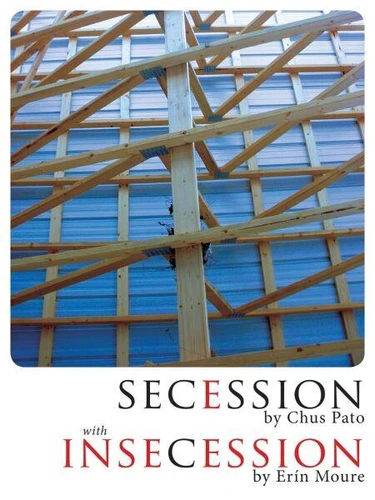



A central figure in contemporary poetry and one of the most iconoclastic figures in Galician and European literature, Chus Pato's sixth book, m-Talá, broke the poetic mould in 2000. Hordes of Writing, the third text in her projected pentology Method, received the 2008 Spanish Critics' Prize for Galician Poetry, and the Losada Diéguez Literary Prize in 2009. Pato continues to refashion the way we think of the possibilities of poetic text, of words, bodies, political and literary space, and of the construction of ourselves as individual, community, nation, world.
She brings us face to face with the traumas and migrations of Europe, with writing itself, and the possibility (or not) of poetry accounting for our animal selves. Secession is Pato's ninth book and her fourth to be translated into English. Erín Moure is a Montréal poet and translator curious about what's active in the poetry of others. Moure's most recent books are Kapusta (2015) and Insecession, a biotranspoetics published in one volume with her translation from Galician of Chus Pato's biopoetics, Secession (BookThug, 2014).
Other recent translations include White Piano (2013) by Nicole Brossard, translated with Robert Majzels from the French, and Galician Songs (2013) by Rosalía de Castro, translated from the Galician.
She brings us face to face with the traumas and migrations of Europe, with writing itself, and the possibility (or not) of poetry accounting for our animal selves. Secession is Pato's ninth book and her fourth to be translated into English. Erín Moure is a Montréal poet and translator curious about what's active in the poetry of others. Moure's most recent books are Kapusta (2015) and Insecession, a biotranspoetics published in one volume with her translation from Galician of Chus Pato's biopoetics, Secession (BookThug, 2014).
Other recent translations include White Piano (2013) by Nicole Brossard, translated with Robert Majzels from the French, and Galician Songs (2013) by Rosalía de Castro, translated from the Galician.