
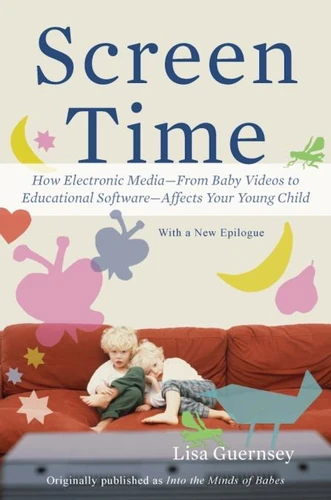
Screen Time. How Electronic Media-From Baby Videos to Educational Software-Affects Your Young Child
Par :Formats :
Disponible dans votre compte client Decitre ou Furet du Nord dès validation de votre commande. Le format ePub protégé est :
- Compatible avec une lecture sur My Vivlio (smartphone, tablette, ordinateur)
- Compatible avec une lecture sur liseuses Vivlio
- Pour les liseuses autres que Vivlio, vous devez utiliser le logiciel Adobe Digital Edition. Non compatible avec la lecture sur les liseuses Kindle, Remarkable et Sony
- Non compatible avec un achat hors France métropolitaine
 , qui est-ce ?
Notre partenaire de plateforme de lecture numérique où vous retrouverez l'ensemble de vos ebooks gratuitement
Pour en savoir plus sur nos ebooks, consultez notre aide en ligne ici
C'est si simple ! Lisez votre ebook avec l'app Vivlio sur votre tablette, mobile ou ordinateur :

- Nombre de pages320
- FormatePub
- ISBN978-0-465-03134-4
- EAN9780465031344
- Date de parution19/03/2012
- Protection num.Adobe DRM
- Infos supplémentairesepub
- ÉditeurBasic Books
Résumé
As a mother, Lisa Guernsey wondered about the influence of television on her two young daughters. As a reporter, she resolved to find out. What she first encountered was tired advice, sensationalized research claims, and a rather draconian mandate from the American Academy of Pediatrics: no TV at all before the age of two. But like many parents, she wanted straight answers and realistic advice, so she kept digging: she visited infant-perception labs and child development centers around the country.
She interviewed scores of parents, psychologists, cognitive scientists, and media researchers, as well as programming executives at Noggin, Disney, Nickelodeon, Sesame Workshop, and PBS. Much of what she found flies in the face of conventional wisdom and led her to conclude that new parents will be best served by focusing on &"the three C's": content, context, and the individual child.< Advocating a new approach to television and DVDs, Guernsey focuses on infants to five-year-olds and goes beyond the headlines to explore what exactly is &"educational"; about educational media.
She examines how play and language development are affected by background and foreground television and how to choose videos that are age-appropriate. She explains how to avoid the hype of "brain stimulation"; and focus instead on social relationships and the building blocks of language and literacy. Along the way, Guernsey highlights independent research on shows ranging from Dora the Explorer to Dragon Tales, and distills some surprising new findings in the field of child development.
Into the Minds of Babes is a fascinating book that points out how little credible research exists to support the AAP's dire recommendation. Parents, teachers, and psychologists will be relieved to learn positive approaches to using videos with young children and will be empowered to make their own informed choices.
She interviewed scores of parents, psychologists, cognitive scientists, and media researchers, as well as programming executives at Noggin, Disney, Nickelodeon, Sesame Workshop, and PBS. Much of what she found flies in the face of conventional wisdom and led her to conclude that new parents will be best served by focusing on &"the three C's": content, context, and the individual child.< Advocating a new approach to television and DVDs, Guernsey focuses on infants to five-year-olds and goes beyond the headlines to explore what exactly is &"educational"; about educational media.
She examines how play and language development are affected by background and foreground television and how to choose videos that are age-appropriate. She explains how to avoid the hype of "brain stimulation"; and focus instead on social relationships and the building blocks of language and literacy. Along the way, Guernsey highlights independent research on shows ranging from Dora the Explorer to Dragon Tales, and distills some surprising new findings in the field of child development.
Into the Minds of Babes is a fascinating book that points out how little credible research exists to support the AAP's dire recommendation. Parents, teachers, and psychologists will be relieved to learn positive approaches to using videos with young children and will be empowered to make their own informed choices.