SOLDES
Jusqu'à -70% sur une sélection d'articles*

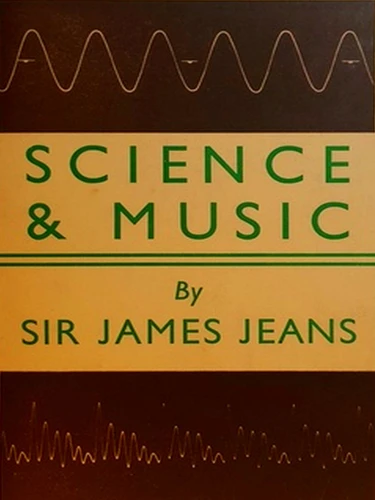
Science and Music
Par :Formats :
Disponible dans votre compte client Decitre ou Furet du Nord dès validation de votre commande. Le format ePub est :
- Compatible avec une lecture sur My Vivlio (smartphone, tablette, ordinateur)
- Compatible avec une lecture sur liseuses Vivlio
- Pour les liseuses autres que Vivlio, vous devez utiliser le logiciel Adobe Digital Edition. Non compatible avec la lecture sur les liseuses Kindle, Remarkable et Sony
 , qui est-ce ?
Notre partenaire de plateforme de lecture numérique où vous retrouverez l'ensemble de vos ebooks gratuitement
Pour en savoir plus sur nos ebooks, consultez notre aide en ligne ici
C'est si simple ! Lisez votre ebook avec l'app Vivlio sur votre tablette, mobile ou ordinateur :

- FormatePub
- ISBN978-1-77464-410-2
- EAN9781774644102
- Date de parution09/11/2021
- Protection num.Digital Watermarking
- Taille3 Mo
- Infos supplémentairesepub
- ÉditeurRare Treasure Editions
Résumé
As the author mentions in the Preface, the intent of the book is to explain in a non-technical manner the main outlines of parts of science specially related to the questions and problems of music, assuming no previous knowledge either of science or of mathematics on the part of the reader.
Sir James Jeans, who was a noted British scientist, gave a physical analysis of musical sounds, in what is considered to be the best exposition on the subject, a book of great intellectual stature.
His aim was to convey precise information, in a simple non-technical way, that will be of interest to the amateur as well as the serious student of music. The discussion begins with an explanation of the development of the human faculty of hearing. For example, why do some sounds produce pleasure when they reach our ears and some pain? How do we retain the pleasurable quality, as it passes on from one stage of electronic equipment to another? These and other pertinent questions on the transmission and reproduction of sound are answered.
The various methods of producing sound, and the qualities of the sounds produced, are further discussed as they relate to vibrations of strings and harmonics, and vibrations of air. Harmony and discord are also considered. In the final chapters on the concert room and hearing, the discussion focuses on the transmission of sound from its source to the eardrum and from the eardrum to the brain. A general theory of acoustics is also covered as well as acoustical analyses. "Science and Music is a rare book, as an author does not often combine very distinguished scientific abilities with musical knowledge and power of simple exposition.
It will probably become a minor classic." - Manchester Guardian.
His aim was to convey precise information, in a simple non-technical way, that will be of interest to the amateur as well as the serious student of music. The discussion begins with an explanation of the development of the human faculty of hearing. For example, why do some sounds produce pleasure when they reach our ears and some pain? How do we retain the pleasurable quality, as it passes on from one stage of electronic equipment to another? These and other pertinent questions on the transmission and reproduction of sound are answered.
The various methods of producing sound, and the qualities of the sounds produced, are further discussed as they relate to vibrations of strings and harmonics, and vibrations of air. Harmony and discord are also considered. In the final chapters on the concert room and hearing, the discussion focuses on the transmission of sound from its source to the eardrum and from the eardrum to the brain. A general theory of acoustics is also covered as well as acoustical analyses. "Science and Music is a rare book, as an author does not often combine very distinguished scientific abilities with musical knowledge and power of simple exposition.
It will probably become a minor classic." - Manchester Guardian.