
Mark Doty's books of poetry and nonfiction prose have been honored with numerous distinctions, including the National Book Critics Circle Award, the PEN/Martha Albrand Award, the Los Angeles Times Book Prize, and, in the United Kingdom, the T. S. Eliot Prize. In 2008, he won the National Book Award for Fire to Fire: New and Selected Poems. He is a professor at the University of Houston, and he lives in New York City.
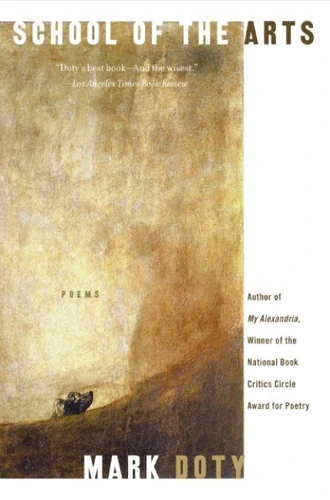
School of the Arts. Poems
Par :Formats :
Disponible dans votre compte client Decitre ou Furet du Nord dès validation de votre commande. Le format ePub protégé est :
- Compatible avec une lecture sur My Vivlio (smartphone, tablette, ordinateur)
- Compatible avec une lecture sur liseuses Vivlio
- Pour les liseuses autres que Vivlio, vous devez utiliser le logiciel Adobe Digital Edition. Non compatible avec la lecture sur les liseuses Kindle, Remarkable et Sony
- Non compatible avec un achat hors France métropolitaine
 , qui est-ce ?
Notre partenaire de plateforme de lecture numérique où vous retrouverez l'ensemble de vos ebooks gratuitement
Pour en savoir plus sur nos ebooks, consultez notre aide en ligne ici
C'est si simple ! Lisez votre ebook avec l'app Vivlio sur votre tablette, mobile ou ordinateur :

- FormatePub
- ISBN978-0-06-187776-6
- EAN9780061877766
- Date de parution13/10/2009
- Protection num.Adobe DRM
- Infos supplémentairesepub
- ÉditeurHarper
Résumé
The darkly graceful poems in Mark Doty's seventh collection explore the ways in which we are educated by the implacable powers of time and desire. The world constantly renews itself, and the new brings both possibility and erasure. Given the limits of our own bodies, how are we to live within the inevitability of despair?This is the plainest of Doty's books, its language stripped and humbled. But whatever depths are sounded in these poems, their humane and open music sustains.
Art itself instructs us. Lucian Freud's startling renditions of human skin, Virginia Woolf's ecstatic depiction of consciousness, Caravaggio's only-too-real people elevated to difficult glory -- all turn the light of human intelligence upon "the night of time."Formally inventive, warm, at once witty and disconsolate, School of the Arts represents a poet reinventing his own voice at midlife, finding a way through a troubled passage.
Acutely attentive, insistently alive, this is a book of "fierce vulnerability."
Art itself instructs us. Lucian Freud's startling renditions of human skin, Virginia Woolf's ecstatic depiction of consciousness, Caravaggio's only-too-real people elevated to difficult glory -- all turn the light of human intelligence upon "the night of time."Formally inventive, warm, at once witty and disconsolate, School of the Arts represents a poet reinventing his own voice at midlife, finding a way through a troubled passage.
Acutely attentive, insistently alive, this is a book of "fierce vulnerability."
A propos de Mark Doty
Dog Years. A Memoir
E-book
12,99 €
What is the Grass
E-book
6,99 €
Deep Lane
E-book
9,49 €
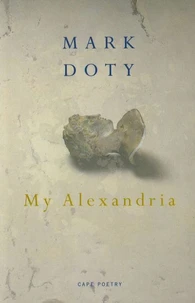
My Alexandria
E-book
10,99 €
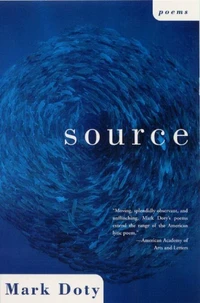
Source. Poems
E-book
7,99 €
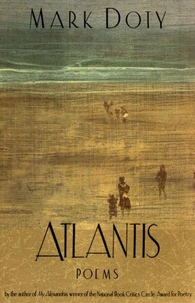
Atlantis. Poems by
E-book
8,99 €
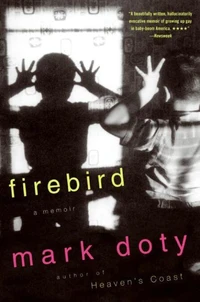
Firebird. A Memoir
E-book
8,99 €
9,99 €
Sweet Machine. Poems by
E-book
7,99 €
Heaven's Coast. A Memoir
E-book
9,99 €