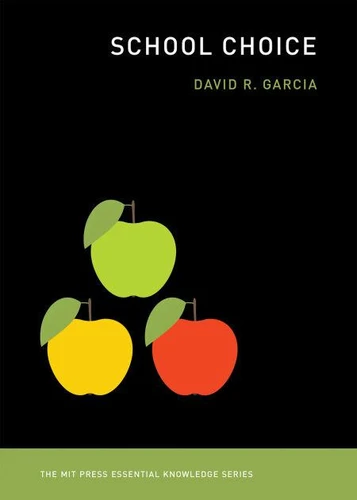
School Choice
Par :Formats :
Disponible dans votre compte client Decitre ou Furet du Nord dès validation de votre commande. Le format ePub protégé est :
- Compatible avec une lecture sur My Vivlio (smartphone, tablette, ordinateur)
- Compatible avec une lecture sur liseuses Vivlio
- Pour les liseuses autres que Vivlio, vous devez utiliser le logiciel Adobe Digital Edition. Non compatible avec la lecture sur les liseuses Kindle, Remarkable et Sony
- Non compatible avec un achat hors France métropolitaine
 , qui est-ce ?
Notre partenaire de plateforme de lecture numérique où vous retrouverez l'ensemble de vos ebooks gratuitement
Pour en savoir plus sur nos ebooks, consultez notre aide en ligne ici
C'est si simple ! Lisez votre ebook avec l'app Vivlio sur votre tablette, mobile ou ordinateur :

- Nombre de pages216
- FormatePub
- ISBN978-0-262-34984-0
- EAN9780262349840
- Date de parution18/09/2018
- Protection num.Adobe DRM
- Taille257 Ko
- Infos supplémentairesepub
- ÉditeurThe MIT Press
Résumé
An accessible guide to the major issues and arguments surrounding school choice. The issues and arguments surrounding school choice are sometimes hijacked to make political points about government control, democratic ideals, the public good, and privatization. In this volume in the MIT Press Essential Knowledge series, David Garcia avoids partisan arguments to offer an accessible, objective, and comprehensive guide to school choice.
He first outlines the different types of school choice, including home schooling, private schools, freedom-of-choice plans, magnet schools, charter schools, vouchers, and education savings accounts. Two themes emerge as particularly resonant in the American school choice debate: the long history of school desegregation, and debates over the roles and responsibilities of government. Is education a public good, for the collective benefit of society, or a private good, to benefit the individual?Garcia describes and evaluates the major arguments supporting school choice policies: the elimination of government bureaucracies, the introduction of competition into education through market forces, the promotion of parental choice, and the casting of school choice as a civil right.
He examines the research on the effects of school choice and summarizes general trends. Finally, he considers how school choice policies are likely to evolve. He notes that the Trump administration's Secretary of Education, Betsy DeVos, is an advocate for school choice, and that the administration's budget allocations signal a deliberate shift from long-standing federal policies that provide supplemental funding for low-income schools.
Instead, new policies provide incentives for low-income families to leave public schools altogether through choice. This book will be an essential resource for participating in the debates that are sure to follow.
He first outlines the different types of school choice, including home schooling, private schools, freedom-of-choice plans, magnet schools, charter schools, vouchers, and education savings accounts. Two themes emerge as particularly resonant in the American school choice debate: the long history of school desegregation, and debates over the roles and responsibilities of government. Is education a public good, for the collective benefit of society, or a private good, to benefit the individual?Garcia describes and evaluates the major arguments supporting school choice policies: the elimination of government bureaucracies, the introduction of competition into education through market forces, the promotion of parental choice, and the casting of school choice as a civil right.
He examines the research on the effects of school choice and summarizes general trends. Finally, he considers how school choice policies are likely to evolve. He notes that the Trump administration's Secretary of Education, Betsy DeVos, is an advocate for school choice, and that the administration's budget allocations signal a deliberate shift from long-standing federal policies that provide supplemental funding for low-income schools.
Instead, new policies provide incentives for low-income families to leave public schools altogether through choice. This book will be an essential resource for participating in the debates that are sure to follow.