SOLDES
Jusqu'à -70% sur une sélection d'articles*

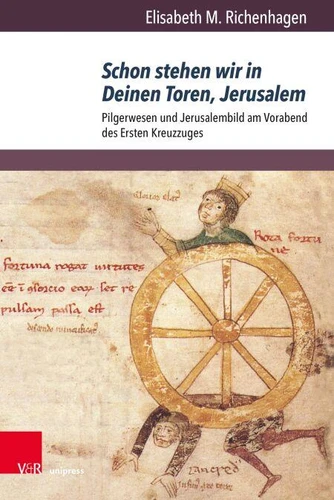
Schon stehen wir in Deinen Toren, Jerusalem. Pilgerwesen und Jerusalembild am Vorabend des Ersten Kreuzzuges
Par :Formats :
Disponible dans votre compte client Decitre ou Furet du Nord dès validation de votre commande. Le format PDF est :
- Compatible avec une lecture sur My Vivlio (smartphone, tablette, ordinateur)
- Compatible avec une lecture sur liseuses Vivlio
- Pour les liseuses autres que Vivlio, vous devez utiliser le logiciel Adobe Digital Edition. Non compatible avec la lecture sur les liseuses Kindle, Remarkable et Sony
 , qui est-ce ?
Notre partenaire de plateforme de lecture numérique où vous retrouverez l'ensemble de vos ebooks gratuitement
Pour en savoir plus sur nos ebooks, consultez notre aide en ligne ici
C'est si simple ! Lisez votre ebook avec l'app Vivlio sur votre tablette, mobile ou ordinateur :

- Nombre de pages390
- FormatPDF
- ISBN978-3-8470-1081-4
- EAN9783847010814
- Date de parution04/12/2023
- Protection num.pas de protection
- Taille11 Mo
- Infos supplémentairespdf
- ÉditeurV&R Unipress
Résumé
Seit dem 3. Jahrhundert brachen christliche Pilger nach Jerusalem auf. Um die Jahrtausendwende rückt die Heilige Stadt jedoch verstärkt in den Fokus des lateinisch-christlichen Westens und das Pilgerwesen erfährt einen deutlichen Aufschwung: Neben zahlreichen Einzelpilgern und Kleingruppen treten erstmalig auch große Pilgerzüge auf, die den Zeitgenossen außergewöhnlich, manchmal auch beängstigend erschienen.
Anhand eines bislang kaum bekannten Quellenkorpus aus historiografischen und hagiografischen Texten, Urkunden, Testamenten und Briefen zeichnet die Autorin Pilgermotive des 11. Jahrhunderts nach und skizziert Vorstellungen und Vergegenwärtigungen Jerusalems am Vorabend des Ersten Kreuzzuges. Since the third century, Christian pilgrims have travelled to Jerusalem. Around the year 2000 the holy city increasingly became the focus of Latin-Christian Western society and pilgrimage tremendously gained momentum.
Besides numerous single pilgrims and small groups, large groups of pilgrims appeared, which seemed peculiar or even sometimes intimidating to others. By analysing hardly known sources such as historiographic and hagiographic texts, certificates, testaments and letters the author portrays motives of pilgrimage of the eleventh century and shows concepts and visualisations of Jerusalem on the eve of the first crusade.
Anhand eines bislang kaum bekannten Quellenkorpus aus historiografischen und hagiografischen Texten, Urkunden, Testamenten und Briefen zeichnet die Autorin Pilgermotive des 11. Jahrhunderts nach und skizziert Vorstellungen und Vergegenwärtigungen Jerusalems am Vorabend des Ersten Kreuzzuges. Since the third century, Christian pilgrims have travelled to Jerusalem. Around the year 2000 the holy city increasingly became the focus of Latin-Christian Western society and pilgrimage tremendously gained momentum.
Besides numerous single pilgrims and small groups, large groups of pilgrims appeared, which seemed peculiar or even sometimes intimidating to others. By analysing hardly known sources such as historiographic and hagiographic texts, certificates, testaments and letters the author portrays motives of pilgrimage of the eleventh century and shows concepts and visualisations of Jerusalem on the eve of the first crusade.