SOLDES
Jusqu'à -70% sur une sélection d'articles*

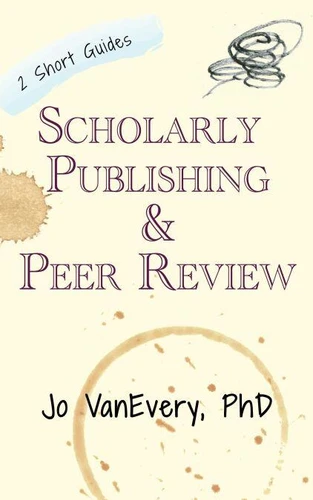
Scholarly Publishing & Peer Review. Short Guides
Par :Formats :
Disponible dans votre compte client Decitre ou Furet du Nord dès validation de votre commande. Le format ePub est :
- Compatible avec une lecture sur My Vivlio (smartphone, tablette, ordinateur)
- Compatible avec une lecture sur liseuses Vivlio
- Pour les liseuses autres que Vivlio, vous devez utiliser le logiciel Adobe Digital Edition. Non compatible avec la lecture sur les liseuses Kindle, Remarkable et Sony
 , qui est-ce ?
Notre partenaire de plateforme de lecture numérique où vous retrouverez l'ensemble de vos ebooks gratuitement
Pour en savoir plus sur nos ebooks, consultez notre aide en ligne ici
C'est si simple ! Lisez votre ebook avec l'app Vivlio sur votre tablette, mobile ou ordinateur :

- FormatePub
- ISBN978-1-912040-62-9
- EAN9781912040629
- Date de parution21/10/2022
- Protection num.pas de protection
- Infos supplémentairesepub
- ÉditeurJo VanEvery
Résumé
This bundle brings together 2 Short Guides to help you navigate publishing your scholarly research: Scholarly Publishing and Peer Review. In Scholarly Publishing, I explain the relationship between the primary purpose of publishing as a way of communicating your research and the ways publications are used in processes that evaluate you as a scholar. The various publishing choices are explained to help you make decisions about what's best in your specific circumstances.
There is also a brief section on promoting your work so that other scholars might find it. In the Short Guide to Peer Review, I treat review as primarily an editorial process, situated in relation to the value of academic freedom and the effects of it being voluntary labour. The emotional work involved in giving and receiving criticism, especially anonymous, asynchronous criticism, is also central to my approach.
Guidance is provided for both addressing comments received from reviewers, and for providing effective editorial feedback as a peer reviewer. The information here will also enable the reader to ask better questions of mentors and others with specific institutional or disciplinary expertise.
There is also a brief section on promoting your work so that other scholars might find it. In the Short Guide to Peer Review, I treat review as primarily an editorial process, situated in relation to the value of academic freedom and the effects of it being voluntary labour. The emotional work involved in giving and receiving criticism, especially anonymous, asynchronous criticism, is also central to my approach.
Guidance is provided for both addressing comments received from reviewers, and for providing effective editorial feedback as a peer reviewer. The information here will also enable the reader to ask better questions of mentors and others with specific institutional or disciplinary expertise.
A propos de Jo VanEvery
6,99 €

6,99 €
6,99 €