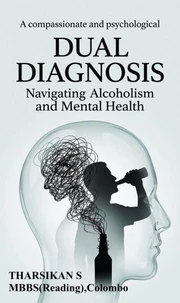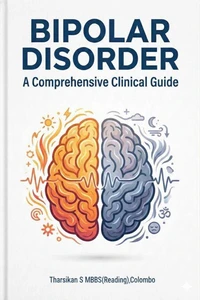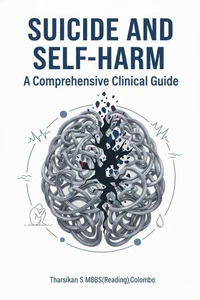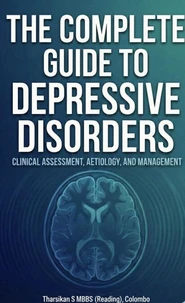
Tharsikan S. is a distinguished final-year medical student at the University of Colombo, Faculty of Medicine-Sri Lanka's premier medical institution. Currently holding a First Class standing, Tharsikan combines academic rigor with a practical approach to clinical learning. As the creator of the 'Comprehensive Guide to Psychiatry' series, he is dedicated to distilling complex psychiatric aetiology and management into high-yield, accessible resources for students and healthcare professionals alike
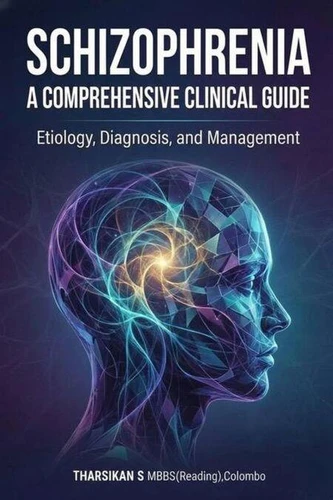
Schizophrenia: A Comprehensive Clinical Guide. Clinical Psychiatry Essentials, #2
Par :Formats :
Disponible dans votre compte client Decitre ou Furet du Nord dès validation de votre commande. Le format ePub est :
- Compatible avec une lecture sur My Vivlio (smartphone, tablette, ordinateur)
- Compatible avec une lecture sur liseuses Vivlio
- Pour les liseuses autres que Vivlio, vous devez utiliser le logiciel Adobe Digital Edition. Non compatible avec la lecture sur les liseuses Kindle, Remarkable et Sony
 , qui est-ce ?
Notre partenaire de plateforme de lecture numérique où vous retrouverez l'ensemble de vos ebooks gratuitement
Pour en savoir plus sur nos ebooks, consultez notre aide en ligne ici
C'est si simple ! Lisez votre ebook avec l'app Vivlio sur votre tablette, mobile ou ordinateur :

- FormatePub
- ISBN8233024351
- EAN9798233024351
- Date de parution04/02/2026
- Protection num.pas de protection
- Infos supplémentairesepub
- ÉditeurLinda Balsamo
Résumé
Ebook Description:This comprehensive clinical guide offers a deep dive into the complexities of schizophrenia, designed for students, healthcare professionals, and anyone seeking a thorough understanding of the disorder. Structured into three logical parts, the book takes the reader on a journey from foundational knowledge to practical clinical application.. Part I: Foundations and Phenomenology covers the historical evolution of the diagnosis, the core clinical features (positive, negative, and disorganized symptoms), and the specific diagnostic criteria used in modern psychiatry (ICD-10 and DSM-5)..
Part II: Pathophysiology and Causation explores the "why" of schizophrenia, examining the intricate interplay of genetics, environmental risk factors, and neurobiological mechanisms, including the dopamine and glutamate hypotheses.. Part III: Clinical Management provides a practical framework for assessment and treatment. It details pharmacological strategies, including the use of first- and second-generation antipsychotics and Clozapine for treatment resistance, alongside crucial psychosocial interventions like CBT for psychosis and family therapy..
With its clear structure and wealth of information, this guide is an essential resource for mastering the clinical aspects of schizophrenia.
Part II: Pathophysiology and Causation explores the "why" of schizophrenia, examining the intricate interplay of genetics, environmental risk factors, and neurobiological mechanisms, including the dopamine and glutamate hypotheses.. Part III: Clinical Management provides a practical framework for assessment and treatment. It details pharmacological strategies, including the use of first- and second-generation antipsychotics and Clozapine for treatment resistance, alongside crucial psychosocial interventions like CBT for psychosis and family therapy..
With its clear structure and wealth of information, this guide is an essential resource for mastering the clinical aspects of schizophrenia.
A propos de Tharsikan Sivathasan
18,99 €

16,99 €